

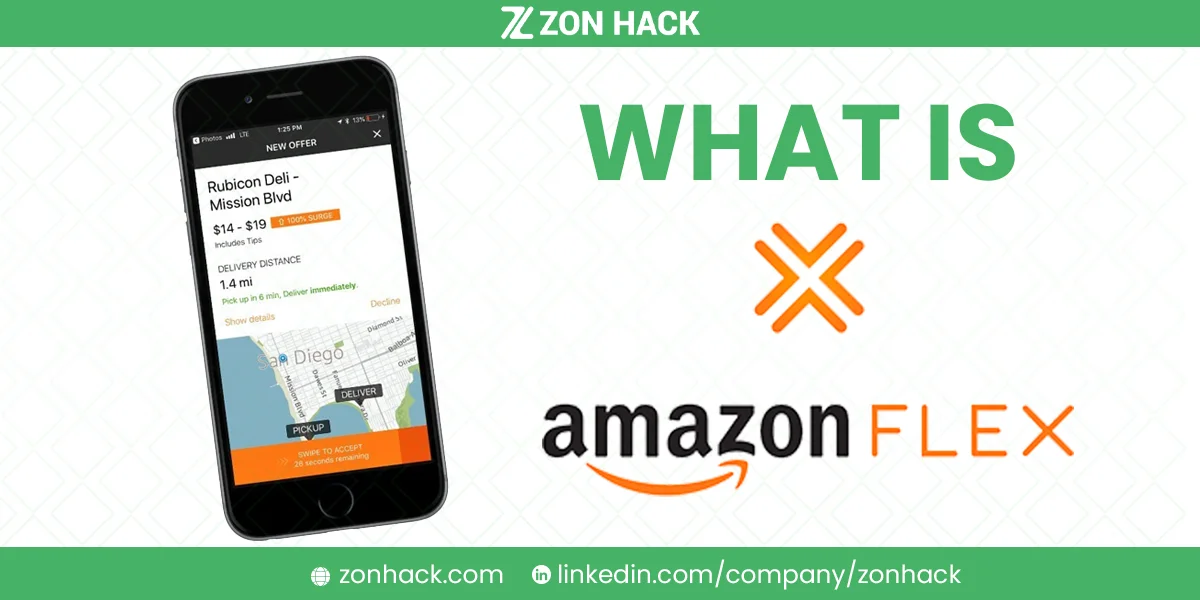
Amazon Flex is Amazon’s delivery gig program. You drive your own car, book time slots in the app, collect parcels from a depot, and run a route Amazon assigns. Pay is quoted per block rather than per hour, and Amazon advertises rates that commonly work out around $18 to $25 per hour before your costs.
That last phrase carries the whole story. I think the advertised rate is the most misleading number in gig work, and I’ll show you the honest arithmetic below, with the requirements.
How Amazon Flex actually works
- Apply through the Amazon Flex app and pass a background check.
- Book a slot, usually two to six hours, either scheduled ahead or grabbed as an instant offer.
- Turn up at the depot on time, scan parcels, and load the boot yourself.
- Follow the app’s route. Amazon decides sequence and expects you to finish inside the block.
- Get paid weekly, straight to your bank.
Blocks are competitive. Fiercely so, in cities. Decent slots vanish within seconds of release, which is the part most write-ups skip and every driver notices in week one. I’ve lost count of the forum threads that open with exactly this complaint.
What you need to qualify
- Age 21 or over.
- A valid driver’s license and, in most markets, a mid-sized four-door vehicle or larger. Some programs accept smaller cars for specific delivery types.
- Insurance in your own name, plus a clean enough record to pass screening.
- A smartphone that runs the app reliably. This is not optional; the app is the job.
- A successful background check, covering criminal and driving history.
- The right to work in the country, since you are contracting rather than being employed.
Requirements vary by city and by delivery type, so the app’s own list for your location is the only authoritative version.
The pay maths nobody puts in the ad
Amazon quotes gross pay per block. Your take-home is that figure minus what the car costs you. Those expenses are real, and in my experience most new drivers skip this sum entirely for the first month.
Subtract, per hour worked:
- Fuel, the obvious one.
- Depreciation, the invisible one. High-mileage delivery work ages a car quickly.
- Maintenance and tyres, which arrive as lump sums rather than smooth deductions.
- Insurance, since personal policies often exclude delivery work and commercial cover costs more.
- Self-employment tax, because you are an independent contractor receiving a 1099, not an employee.
- Unpaid time, including the drive to the depot and any wait before dispatch.
The US standard mileage rate exists precisely because vehicle costs run to a substantial number of cents per mile. Once you deduct it honestly, a $22 per hour block often nets closer to the mid-teens, and less in an expensive vehicle.
None of that makes it a bad deal. I am saying the advertised number is not your wage. Drivers who track mileage properly make better decisions about which blocks to accept, and I’d put that habit above every other tip in this guide.
What drivers actually like about it
Genuine schedule control. No shifts assigned to you, no manager. Want Tuesday off? Simply do not reserve a block. In my reading of driver feedback, this is the single benefit people rank first.
Fast onboarding. Application to first delivery can be days rather than weeks.
No customer conversation required. Compared with driving passengers, that suits plenty of people.
Predictable work. The task barely varies, which is either restful or dull depending on temperament.
What tends to wear thin
Slot scarcity. Steady weekly earnings mean competing for availability, and saturation differs enormously by city. I consider this the deal-breaker question to research before applying.
Vehicle wear. You are converting your car into income at a rate that only becomes obvious later.
Awkward routes. Apartment blocks without parking, gated estates, and rural stretches stretch a two-hour slot into three.
No employment protections. Contractor status means no paid leave, no employer-side benefits, and deactivation risk if metrics slip.
Weather. All of the above, in the rain.
Is Amazon Flex worth it?
Three things decide it, in my view, and I’d weigh them in this order.
Your car. An older, fuel-efficient, cheap-to-repair vehicle changes the arithmetic entirely versus a new financed SUV. The second case can genuinely lose money at the same block rate.
Your city. Where availability is plentiful, this works as steady part-time earnings. Where they are scarce, it works as occasional top-up and not much else.
Your alternative. Compared with other gig work, Flex is physically easier than warehouse shifts and less sociable than rideshare. Compared with a salaried job, it trades security for flexibility.
For supplementary income with a suitable car, it holds up. As a full-time replacement? Most drivers I have read about find the vehicle costs and block competition wear them down within a year, and I would not plan a household budget around it.
How Amazon Flex compares with other gig work
| Work | Pay control | Vehicle wear | Social demand | Barrier to start |
|---|---|---|---|---|
| Amazon Flex | Block rates, fixed | High | None | Low |
| Rideshare | Surge and tips | High | Constant | Low |
| Food delivery | Per order plus tips | Medium | Brief | Lowest |
| Warehouse shifts | Hourly, stable | None | Some | Medium |
Two observations from my reading of a great deal of driver reporting. Flex sits at the antisocial end, which many people actively want. And it concentrates its cost in your car, which is the least visible expense of the four, so it flatters itself in month one and reveals itself in month six.
If you own a paid-off, economical car you were going to keep anyway, that concentration works in your favour. If you are financing something new, it works decisively against you.
Practical tips from drivers who last
- Track every mile. Mileage is your biggest deduction and the only way to know your real rate. My advice: start on day one, not at tax time.
- Learn your depot’s rhythm. Release times follow patterns, and knowing them beats refreshing endlessly.
- Turn down bad offers. A long rural route at a boosted rate still loses money once fuel and hours are counted.
- Keep the app’s requirements happy. Delivery completion rate matters to your standing.
- Set money aside for tax from every payment, not at year end.
Selling on Amazon instead of delivering for it
Worth a brief note, because plenty of the people we talk to research Flex while looking for a way into ecommerce generally. Driving pays immediately and does not compound. Selling takes capital and patience, and it can build into a business that keeps earning without your hours.
If that is the direction you are weighing, our guides to free product research tools and FBA prep centers are a reasonable starting point, and neither requires a car.
FAQ
How much does Amazon Flex pay?
Amazon advertises rates that typically work out around $18 to $25 per hour depending on market and block type. That is gross pay, before fuel, vehicle depreciation, insurance, maintenance, and self-employment tax.
What car do I need for Amazon Flex?
Most markets ask for a mid-sized four-door vehicle or larger, with some programs accepting smaller cars for particular delivery types. Requirements differ by city, so check the app for your location.
Is Amazon Flex self-employment?
Yes. Drivers are independent contractors, receive a 1099 in the US, and are responsible for their own taxes and expenses. There are no employee benefits.
Can I do Amazon Flex part time?
That is its main use. You reserve only the blocks you want, so it fits around other work, though reliable income depends on how competitive blocks are in your market.
Does Amazon Flex pay for fuel?
No. Fuel and every other vehicle cost comes out of your block pay, which is why tracking mileage matters so much for judging whether the work pays.
Is Amazon Flex still worth it?
For supplementary income in a cheap-to-run car and a market with available blocks, generally yes. As a full-time income in an expensive vehicle or a saturated market, the maths gets thin quickly.
Last updated: August 26, 2026. Pay rates, vehicle rules, and availability vary by market and change; the Amazon Flex app is the authoritative source for your area.