
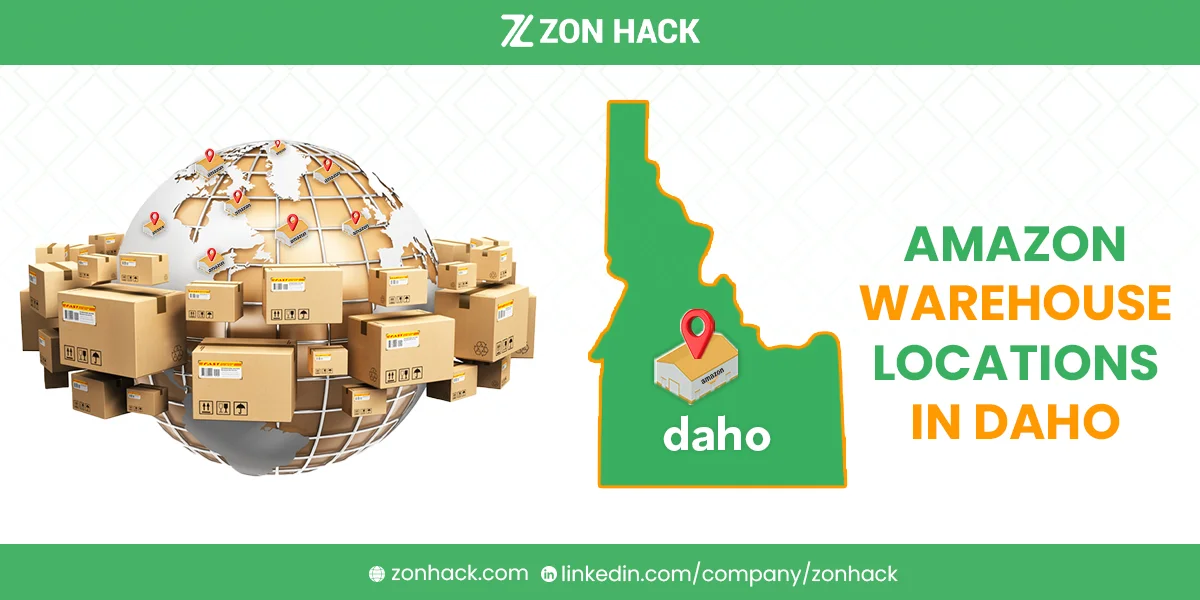
Amazon warehouse locations in Idaho are a network of 5 identified facilities, of which only 1 is a fulfillment center, at Nampa in Canyon County, plus a sortation center and 3 delivery stations around Boise. Everything beyond that first building is last-mile infrastructure which never holds seller inventory.
The more useful fact sits outside the state line. Northern Idaho is served substantially from Spokane Valley, Washington, a facility considerably closer to Coeur d’Alene than Boise will ever be, which is a reminder that state borders mean almost nothing to a fulfillment network planned around drive times and that any list organized by state quietly hides the buildings actually doing the work.
If you arrived looking for warehouse work rather than seller information, Amazon posts current openings on its own hiring site, which is more accurate than any article. The rest of this is written for sellers.
Amazon warehouse locations in Idaho
| Code | Address | Zip | Type | County |
|---|---|---|---|---|
| BOI2 | 5319 E Franklin Rd, Nampa | 83687 | Fulfillment center | Canyon |
| BOI5 | 2201 Freight St, Boise | 83716 | Sortation | Ada |
| DID2 | 6752 Business Way, Boise | 83716 | Delivery station | Ada |
| DID3 | 2660 W Fred Smith St, Meridian | 83642 | Delivery station | Ada |
| SID1 | 2800 E Comstock Ave, Nampa | 83687 | Delivery station | Canyon |
Serving northern Idaho from across the border:
| Code | Address | Zip | Type | State |
|---|---|---|---|---|
| GEG2 | 18007 Garland Ave, Spokane Valley | 99216 | Fulfillment center | Washington |
Read this as a reference point rather than a live inventory. Amazon opens buildings. It converts them. It closes them. It reassigns codes to unrelated sites. Anything operationally important belongs in Seller Central rather than in a table published two years ago.
The shape here is worth noting. Everything in-state clusters in the Treasure Valley around Boise and Nampa, where most of Idaho’s population lives. The long northern panhandle, geographically enormous, has no Amazon storage of its own and leans on Washington.
What the codes tell you
Amazon names facilities after the nearest airport. That convention makes this particular list easier to read than most.
BOI is Boise. GEG is Spokane International, which is why the Washington facility does not look like an Idaho one. The leading D on DID2 and DID3 marks a delivery station, and the state abbreviation follows.
Practical value: a destination code in Seller Central tells you roughly where your goods are heading before you look it up. In our experience reading codes this way against actual shipment destinations, and it orients you quickly. Amazon does reassign them, so treat it as orientation rather than fact.
Which of these can hold your inventory
One of them. Two if you count Spokane.
| Type | What happens there | Holds seller inventory? |
|---|---|---|
| Fulfillment center | Stores goods, picks and packs orders | Yes |
| Amazon Warehousing and Distribution | Bulk storage upstream of FBA | Yes |
| Sortation center | Sorts outbound parcels by destination | No |
| Delivery station | Last-mile dispatch to customers | No |
| Locker, hub, counter | Customer pickup point | No |
Location lists never make this clear. Count 5 Amazon buildings in Idaho, conclude you have 5 storage options, and you have misread the network entirely. Four of them are moving packages picked somewhere else.
The three things worth knowing before you read further
If you take nothing else from this page:
- Only fulfillment centers hold your goods. Idaho has one. Counting Amazon buildings in a state tells you about delivery coverage, not storage.
- You cannot choose your destination. Amazon assigns it, and it may not be anywhere near you.
- The state boundary is irrelevant to the network. Washington serves northern Idaho, and Idaho’s own facility serves parts of Oregon and Nevada.
Everything below expands those three points.
You do not choose which one receives your stock
The question underneath most searches for this topic.
When you build an inbound shipment through Send to Amazon, Amazon assigns the destinations. You supply products and quantities. It returns addresses, drawn from planning models weighing forecast demand, capacity, and inbound cost nationally, with your own position contributing essentially nothing.
Shipments split. One order becomes four deliveries across three states. Normal. It looks alarming the first time, and I would resist opening a support case about it.
Consolidating costs money. Amazon charges an inbound placement service fee when you send to fewer than the 4 or so destinations its network typically prefers. Splitting more widely reduces it and complicates your freight. Our guide to FBA storage fees covers where that sits among the other charges.
You cannot deliver in person. Inbound freight needs a shipment plan, compliant carton labels, and a booked appointment. Arriving without them means being turned away, and I’ve found sellers genuinely attempt it.
Why the network looks like this
Geography explains Idaho better than most states.
Population concentrates in one valley. The Treasure Valley around Boise, Nampa, and Meridian holds most of the state’s people. 1 fulfillment center covers it comfortably, and a second would sit idle.
The panhandle is long and thin. Coeur d’Alene sits roughly 30 miles from Spokane and over 300 from Boise. Building inside Idaho to serve northern Idaho would duplicate capacity already standing half an hour away in another state, which is the sort of thing a network planner declines to do.
Terrain matters. Mountain ranges stretch driving times well beyond what a map suggests. Amazon plans around hours, not miles.
For a seller the inference is modest but real. Assignments to Boise serve the interior northwest, which is a smaller and more dispersed market than a coastal metro. Freight into the region costs more per unit than into a central hub, and delivery promises across a mountainous region are less aggressive than across a dense one.
What this changes for your business
Inbound freight. Idaho is expensive ground to reach from most ports, sitting roughly 400 miles inland from Seattle and over 700 from Los Angeles. If your assignments cluster here your landed cost per unit rises, and our guide to finding a reliable shipping agent covers planning that leg.
Delivery reach. Stock here serves the interior northwest quickly. The coasts, slowly. That is Amazon’s problem rather than yours, though it does shape which buyers see the fastest promise on your listing and therefore which buyers convert best.
Removals. Removal orders are processed wherever Amazon designates, frequently nowhere near where the goods sat. Sellers assume stock returns from the state it left, and it rarely does.
State tax exposure. Inventory stored in a state has been argued to create income or franchise tax obligations, with states taking differing positions. Sales tax on marketplace sales is generally collected by Amazon under marketplace facilitator laws. Our guide to the Amazon Tax Document Library covers that distinction, and it belongs with an accountant rather than an article.
Finding where your stock actually is
More useful than any state list, and rarely done.
Inventory reports in Seller Central show your stock by fulfillment center and SKU. Authoritative for your account, and in our experience it never resembles a published location list.
Your shipment history records where Amazon has routed you before, which predicts the next assignment better than anything else available.
The Send to Amazon workflow shows destinations before you commit, while the freight implications can still be acted on.
Our guides to shipping options for Amazon sellers and warehouse locations in Oklahoma cover the same ground for a differently shaped network. If you want freight, placement fees, and inventory positioning handled together, that sits inside our account management service.
FAQ
How many Amazon warehouses are in Idaho?
Around five facilities are publicly identified, but only one is a fulfillment center, at Nampa in Canyon County. The others are a sortation center and delivery stations that never hold seller inventory.
Does Amazon have a fulfillment center in northern Idaho?
Not in the state. Northern Idaho is served substantially from Spokane Valley, Washington, which sits closer to Coeur d’Alene than Boise does. Fulfillment networks are planned around drive time rather than state lines.
Can I send FBA inventory to the Nampa fulfillment center?
Not by choice. Amazon assigns inbound destinations through Send to Amazon based on its own network planning rather than your location, and may split one shipment across several facilities in different states.
What does the DID prefix mean on an Amazon facility?
The leading D marks a delivery station and ID identifies the state. Delivery stations handle last-mile dispatch and never store seller inventory, which is why they add nothing to the storage options available to you.
Why does an Idaho warehouse list include a Washington address?
Because the network ignores state borders. Spokane Valley serves northern Idaho more efficiently than any in-state site could, and excluding it would give a misleading picture of how the region is actually supplied.
Does storing inventory in Idaho create a tax obligation?
Possibly for income or franchise tax, since states differ on whether stored inventory creates one. Sales tax on marketplace sales is generally collected and remitted by Amazon. Consult an accountant rather than an article.
Last updated: August 29, 2026. Amazon opens, converts, and closes facilities continually and reassigns codes. Seller Central inventory reports and the Send to Amazon workflow carry the authoritative position for your own inventory. If you are looking for warehouse employment rather than seller information, Amazon’s own hiring site carries current openings.