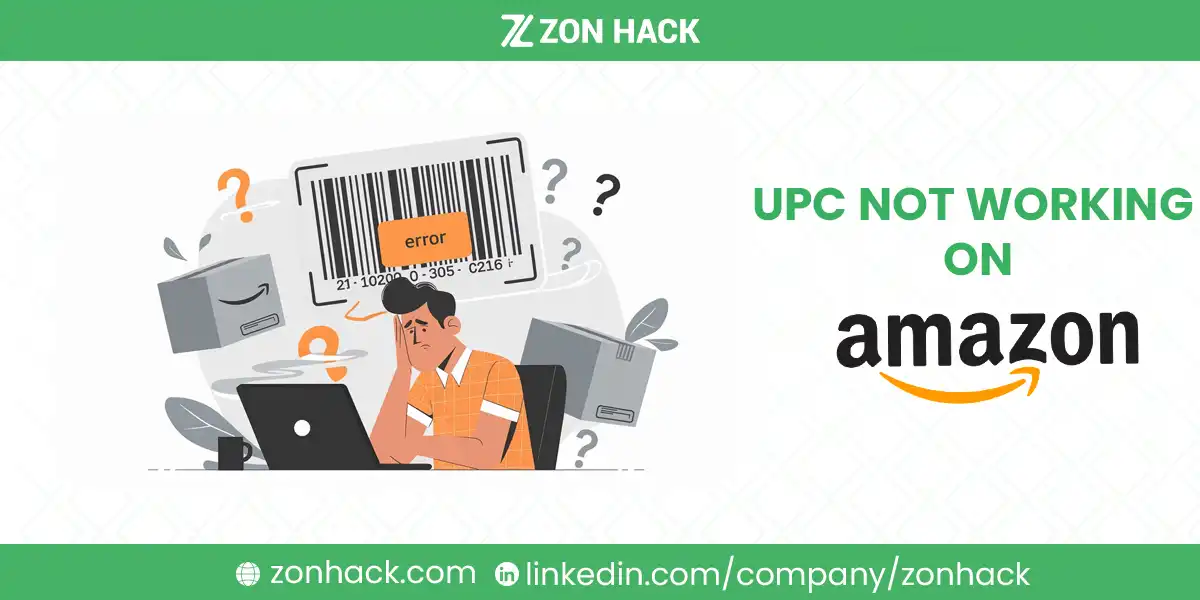
A UPC not working on Amazon is a barcode Amazon’s catalog refuses to accept, and it almost always
reduces to one of 5 specific problems. The error message tells you which. The most common by a distance: the barcode was not issued to you by GS1.
Amazon validates barcodes against the GS1 database. It checks whether the company prefix in your UPC
belongs to the brand you are claiming. A barcode bought cheaply from a reseller belongs to whoever
originally registered that prefix, which is not you, so the check fails.
That is not a bug you can work around. It is the check working, and no amount of resubmitting changes
the answer.
The five errors, and what each means
| Error you see | What it actually means | Fix |
|---|---|---|
| Invalid or unrecognized GTIN | Prefix not registered to you at GS1 | Buy from GS1, or apply for exemption |
| GTIN already in use / ASIN exists | The product is already in the catalog | List against the existing ASIN |
| Product type or category mismatch | Right barcode, wrong category selected | Correct the product type |
| Missing required attributes | Nothing to do with the barcode | Fill the flagged fields |
| Brand not recognized or restricted | Brand gated, or Brand Registry needed | Ungate, or enroll the brand |
Read the top row twice. A resold barcode is the single most frequent cause, and it is also the one
sellers most resist accepting, because they paid for it in good faith. In our experience that conversation
is the whole support ticket.
Cause 1: the barcode is not really yours
The expensive lesson, so worth being plain about.
GS1 issues company prefixes to one specific registered company. Every UPC constructed on that prefix traces
back to them. Buy individual barcodes from a third-party marketplace and the prefix belongs to
whoever registered it, possibly a decade ago, and I’d assume that is the case unless GS1 invoiced you directly.
Amazon’s check is a lookup rather than an opinion. It compares the brand name on your listing against the GS1
record for that prefix. Mismatch, rejection. No discretion involved.
The fix is one of 2 things. Buy barcodes from GS1 in your own country, so the prefix genuinely belongs to you.
Or apply for a GTIN exemption, where you qualify. I’d decide between them deliberately. Our guide to
applying for a GTIN exemption covers who qualifies
and the image requirements that decide most applications.
Which one to choose. GS1 barcodes are portable and work everywhere, including retail and other
marketplaces. An exemption is free and Amazon-only. For a brand you intend to build, I’d buy the real
barcodes, and in our experience the sellers who regret the exemption are the ones who later needed GTINs
for a retail conversation.
A cheap barcode is not a saving. It is a delay, plus the cost of doing it properly afterwards, plus whatever the delay cost you. In our experience sellers count only the first.
How GS1 validation actually works, in plain terms
Worth understanding once, because it explains every error above and every failed workaround below.
A UPC is not a random number. It contains a company prefix, issued by GS1 to one specific registered
business, followed by an item reference that business assigns. The prefix is the part that identifies who
owns the barcode.
GS1 maintains the register. Anyone can look up which company a prefix belongs to. Amazon does exactly
that, automatically, at the moment you submit a listing.
So the check is a name comparison. Amazon reads the brand name on your listing, reads the company on the
GS1 record for that prefix, and asks whether they correspond. Two different names means rejection, and no
resubmission changes a database lookup.
Why resold barcodes exist at all. Before Amazon enforced this, a prefix holder could sell individual
codes and nobody checked. Those sellers still operate, the barcodes are technically valid GS1 numbers, and
they are registered to somebody else. Valid and unusable are not the same thing, which is the distinction
that costs people money.
One consequence sellers do not expect. If you already have listings live on resold barcodes, they may
work until something triggers revalidation, at which point they can fail retroactively. In our experience
that discovery arrives at the worst moment, usually during a catalog edit before a busy season.
What I’d do about that. Audit which of your ASINs sit on barcodes you did not obtain from GS1 yourself.
If any of them matter, migrate them deliberately rather than waiting to be told.
Cause 2: the GTIN is already in use
Different problem, and frequently good news.
If the product genuinely exists in Amazon’s catalog, you do not need a new listing. You add your offer
to the existing ASIN. That is how wholesale and arbitrage work.
Search the ASIN by the barcode before assuming an error. Returns a product? List against it, and I’d be pleased rather than frustrated.
If the existing listing is wrong or poor and you own the brand, Brand Registry gives you the authority
to correct it. Our guide to
Brand Registry versus Brand Approval covers which
one applies to you.
If somebody else has used your barcode, that is a catalog support case requiring evidence rather than
something resubmission will resolve. I’d gather the GS1 record first.
Cause 3, 4, and 5: not the barcode at all
Three errors that mention the GTIN and are caused by something else.
Wrong product type. Amazon’s product type dictates which attributes are mandatory. Select the wrong one
and the listing rejects, occasionally with wording that mentions the identifier. Verify the product type
before anything else, since correcting it costs nothing and I have watched it waste entire days.
Missing required attributes. The error names the fields. Populate them. Populate the optional safety and
compliance attributes too, since blank fields quietly exclude you from filters shoppers are actively using, and in our experience nobody notices that exclusion.
Brand gated or restricted. The barcode is fine and the brand needs approval. Attempt the listing and
read exactly what Amazon asks for, which is usually supplier invoices in a specific format. Our guide to
finding wholesalers covers the
paperwork that passes.
A diagnostic order that saves time
Six steps, cheapest first.
- Read the exact error text rather than the summary. The wording distinguishes a GTIN problem from an
attribute problem. - Search Amazon for the barcode. If an ASIN exists, your job is adding an offer, not creating a
listing. - Check the product type you selected against the product you actually have.
- Check whether the brand or category is gated by attempting the listing and reading the requirement.
- Verify the barcode’s origin. Did it come from GS1, in your name? If not, this is your answer.
- Then decide: GS1 or exemption. Not before, because the previous five steps are free and this one is
not.
Steps 1 to 4 take about fifteen minutes and resolve a good share of cases without spending anything. In
our experience sellers jump to step 6 and buy barcodes they did not need.
What not to do
Four things, and the first two make it worse.
Do not resubmit the same barcode repeatedly. The validation outcome will not alter, and repeated failed
attempts generate catalog noise you may have to explain afterwards. I’d stop after the second attempt.
Do not buy further cheap barcodes. Identical prefix problem, identical outcome, and I’d expect no different result.
Do not invent a barcode. It will fail validation, and should it collide with a genuine prefix you
have manufactured a considerably worse problem for yourself. In my experience that recovery is lengthy.
Do not create a duplicate listing to route around the error. A detached duplicate splits your reviews
and sales history, and cleaning it up is harder than fixing the original. I’d raise a catalog case instead.
One last thought on how sellers end up here. Almost nobody buys a resold barcode carelessly. They buy
it because a legitimate-looking vendor offered exactly what they needed at a fraction of the GS1 price, and
nothing about that transaction announced itself as a problem. I’d rather explain the mechanism than imply
carelessness, because understanding why the check exists is what stops the mistake recurring on the next
product. In our experience the sellers who get this right once never ask the question again.
If you would rather have identifiers, ungating, and listing creation handled properly, that sits inside our
account management service. We have
optimized 10,000+ listings, and we are an Amazon Ads partner and an Amazon SPN Verified Partner.
FAQ
Why is my UPC not working on Amazon?
Most commonly because the barcode was not issued to you by GS1. Amazon validates the company prefix against
the GS1 database and checks it belongs to the brand you are claiming, so a barcode bought from a reseller
fails because the prefix belongs to whoever originally registered it.
Can I use cheap resold barcodes on Amazon?
In practice no. Amazon’s GS1 lookup will find the prefix registered to another company and reject the
listing. The saving is a delay plus the cost of doing it properly afterwards.
What does “GTIN already in use” mean on Amazon?
That the product already exists in Amazon’s catalog, which is frequently good news: you add your offer to
the existing ASIN rather than creating a listing. Search the barcode first, and if you own the brand and the
existing listing is poor, Brand Registry lets you correct it.
Should I buy GS1 barcodes or apply for a GTIN exemption?
GS1 barcodes belong to you and work across retail and other marketplaces. An exemption is free and
Amazon-only. For a brand you intend to build, real barcodes are usually worth it, since sellers who take the
exemption often need GTINs later for a retail conversation.
My barcode is valid but the listing still fails. Why?
Probably the product type is wrong, required attributes are missing, or the brand or category is gated.
These errors sometimes mention the identifier while being caused by something else, so read the exact error
text and check the product type before buying anything.
What should I not do when a UPC fails on Amazon?
Do not resubmit the same barcode repeatedly, buy more resold barcodes, invent a barcode, or create a
duplicate listing to route around the error. A detached duplicate splits your reviews and sales history and
is harder to clean up than the original problem.
Last updated: September 1, 2026. Amazon’s GTIN validation, product type requirements, gated categories,
and exemption eligibility change over time and differ by marketplace; Seller Central carries the current
rules for your account, and GS1 carries current barcode pricing for your country.