
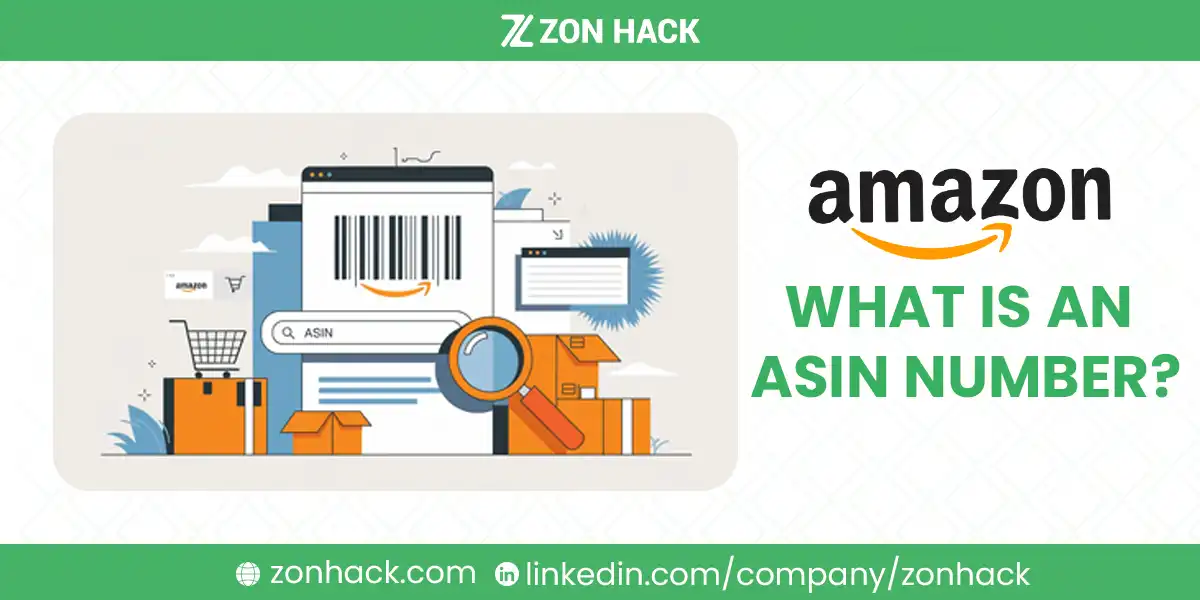
An ASIN (Amazon Standard Identification Number) is a 10-character code of letters and numbers that identifies every product in Amazon’s catalog. You’ll find it in the product URL after /dp/ and in the Product Details section of any listing. Buyers use ASINs to find exact products; sellers live and die by them, because inventory, advertising, and brand protection all hang off that one code.
Here’s how ASINs work, how to look one up in seconds, and the rules around creating them that trip up new sellers.
What is an ASIN Number?
An ASIN number is a 10-character alphanumeric code unique to each product on Amazon. It’s used to identify, track, and manage products in Amazon’s catalog, and it’s critical for both customers and sellers. ASINs help improve product searches, inventory tracking, and visibility on the platform.
Paste an ASIN into Amazon’s search bar and the exact product comes back. That’s the whole point: one code, one product, no ambiguity.
One catch that surprises people: ASINs are marketplace-specific. The same product can carry a different ASIN on amazon.com, amazon.co.uk, and amazon.de, which matters the moment you sell internationally.
ASIN vs ISBN
Each product on Amazon has its own ASIN, except for books. Books are the only products on Amazon that use ISBNs (International Standard Book Numbers) instead of ASINs. For instance, if you’re browsing for a book, you won’t see a typical 10-character alphanumeric ASIN, but rather a number that follows the ISBN format.
Why ASIN Numbers Are Important?
For Customers
For shoppers, ASINs make searches precise. They’re especially handy for items without memorable names: filter cartridges, replacement parts, that one specific cable.
If you know the ASIN, enter it directly in the search bar and skip the browsing entirely.
For Sellers
For sellers, the ASIN is the product’s identity everywhere: inventory reports, ad campaigns, case logs with Seller Support. In my experience, sellers who organize their operations around ASINs (not product names) make far fewer catalog mistakes.
ASINs also power competitor analysis: reverse ASIN lookup tools show which keywords drive traffic to any competitor’s product. More on that below.
ASINs also contribute to ensuring that your product shows up in relevant customer searches. If your product is incorrectly cataloged or listed under the wrong ASIN, it may not appear in the correct search results.
For Amazon
For Amazon, ASINs are how a catalog of hundreds of millions of products stays coherent: every index, category, and search result references them.
Amazon’s search algorithm indexes products by ASIN, which is also how it detects and blocks duplicate listings.
The same system underpins counterfeit protection: unauthorized listings attach to an ASIN, which makes them findable and removable.
How to Find an ASIN on Amazon?
Four ways, fastest first.
On a Product Page
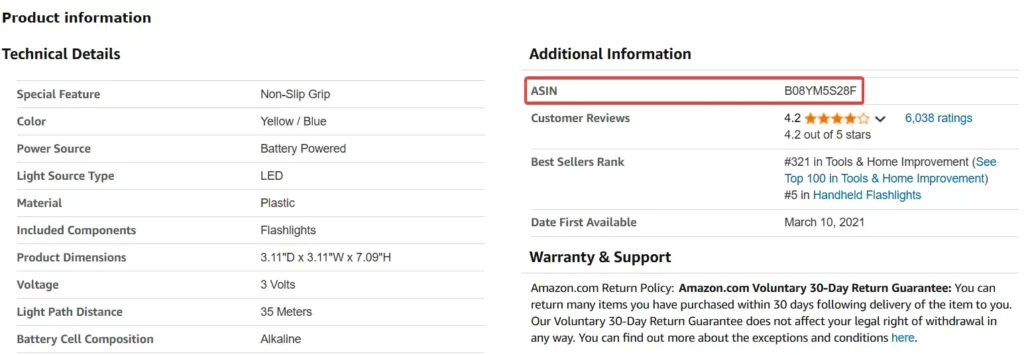
Easiest first. Visit the product page. On most product detail pages, you’ll find the ASIN listed in the Product Details or Additional Information section. If you’re using a mobile device, you may need to scroll down a bit to find this information.
In the URL
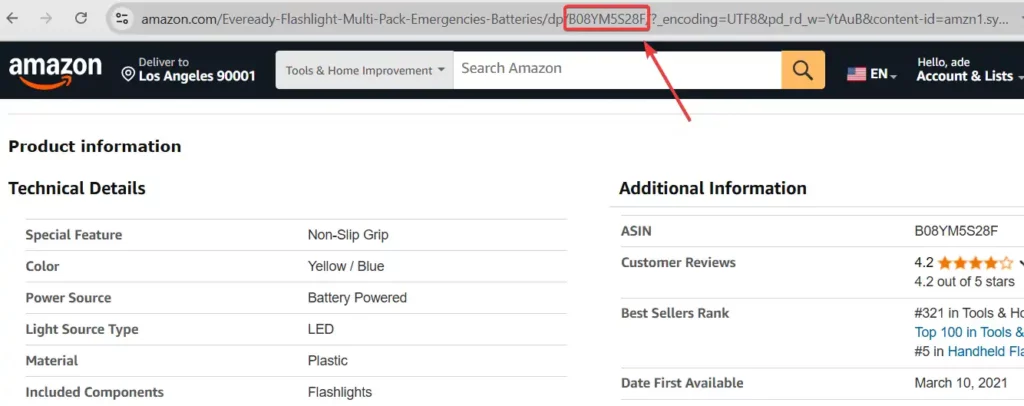
The URL method is my go-to. The ASIN sits right after /dp/:
https://www.amazon.com/dp/B08N5WRWNW
The ASIN is B08N5WRWNW. Two seconds, no scrolling.
Using Third-Party Tools
Tools do it in bulk. Many product research platforms, such as Helium 10, AMZScout, and Jungle Scout, provide ASIN lookup tools that extract ASINs from product pages automatically. Worth it once you’re researching competitors at any scale.
Additionally, browser extensions designed for Amazon sellers, like Keepa or CamelCamelCamel, can also help you track product ASINs, monitor pricing trends, and gather historical data on sales rankings.
In Seller Central
Sellers get a fourth option. Seller Central searches the whole catalog by product name, UPC code, or model number.
How is an ASIN Assigned?
Amazon auto-generates ASINs when new products get listed. Add a product manually in Seller Central and the system mints one for you.
When is a New ASIN Created?
A new ASIN is created only when a product doesn’t already exist in Amazon’s catalog. List something genuinely new and Amazon assigns a fresh ASIN from the details you provide: the product’s name, product brand, and identifier (like UPC or EAN).
Selling something that already exists? Use the existing ASIN. Duplicating it under a new one violates Amazon policy, and I’ve seen it end in removed listings and suspended accounts.
Creating a New ASIN: What You Need to Know
Amazon has firm rules here. Learn them before your first launch, not after your first warning.
When to Create a New ASIN
Create a new ASIN only for a product that isn’t in the catalog yet. Search thoroughly first. Duplicate listings are prohibited, and Amazon’s matching system is better at spotting them than most sellers expect.
To create a new ASIN, you’ll need to add a product via Seller Central. During this process, you will be required to provide essential product details like the GTIN (Global Trade Item Number), UPC (Universal Product Code), or EAN (European Article Number). These identifiers help Amazon ensure that the new ASIN is cataloged correctly.
Once approved, the page gets its ASIN and joins the catalog. New or unusual products take longer. That’s normal.
Restrictions on Creating ASINs
New sellers without sales history face ASIN creation limits. Amazon throttles new-catalog additions to keep spam out, and the limits loosen as your account earns trust.
One product, one ASIN. Try to list an existing product as new and Amazon rejects the submission or force-merges it.
The Role of Product Identifiers in ASIN Creation
ASINs get created from product identifiers, the barcodes of the outside world.
GTIN (Global Trade Item Number)
The GTIN is the global umbrella term. UPC and EAN are its most common formats, and Amazon uses them to create and match ASINs.
UPC (Universal Product Code)
A UPC is the 12-digit barcode on US retail products. You’ll need one to create most new ASINs, unless your product qualifies for an exemption (handmade and custom goods, mainly).
EAN (European Article Number)
The EAN is Europe’s version, usually 13 digits. Same job, different region.
ISBN (International Standard Book Number)
Books skip the system entirely: the ISBN does the ASIN’s job, tracking editions, publishers, and formats.
Reverse ASIN Lookup: A Powerful Tool for Sellers
Reverse ASIN lookup is, frankly, my favorite use of the whole ASIN system: point a tool at a competitor’s ASIN and see what’s working for them.
How Reverse ASIN Lookup Works
A lookup returns the keywords driving traffic to that product: the exact terms customers typed before buying from your competitor. Tools like Keyword Scout turn that into a target list for your own listings and PPC.
Found a competitor ranking on terms you missed? Fold them into your listing. Simple, and it works.
Benefits for Amazon PPC Campaigns
I lean on reverse ASIN lookup most when refining Amazon PPC campaigns. Knowing which terms convert for your niche sharpens your bidding and surfaces high-converting keywords you’d never guess from your own data alone.
ASINs and Brand Protection: Safeguarding Your Listings
Brand protection on Amazon runs through ASINs too. Three programs matter here.
Amazon Brand Registry
Amazon Brand Registry provides sellers with enhanced protection for their ASINs. If you’d rather not fight the eligibility paperwork yourself, our Brand Registry service handles registration for Amazon and Walmart end to end. By enrolling in the Brand Registry, you gain access to tools that help you report intellectual property infringements, including counterfeit goods or unauthorized use of your brand name. This helps ensure that only legitimate sellers can list products under your ASINs.
Brand Gating and Permissions
Brand gating locks protected ASINs. With a registered trademark, Amazon can require invoices and your permission before anyone else sells under your ASINs.
Transparency Program
The Transparency Program goes further: unit-level codes on every product, verified through the supply chain. Counterfeits under your ASINs get much harder.
Merging Duplicate ASINs
Duplicates still happen: bad listings, changed details. Amazon lets sellers merge duplicate ASINs to consolidate them, which also keeps buyers from stumbling into competing pages for the same item.
Best Practices for Managing ASINs
Managing ASINs well ensures that your products appear in the right search results and reach the correct customers. Below are some best practices to keep in mind:
Ensure Accurate ASIN Usage
Match the ASIN to the exact product, every time. Wrong-ASIN listings lose search visibility and eventually get removed.
Avoid Duplicate ASINs
Find your product living under multiple ASINs? Consolidate immediately. And research before every new ASIN you create.
Regularly Update Product Information
Review your ASINs on a schedule. Stale details drag rankings and invite catalog errors.
Create an ASIN List
Keep a master list of your ASINs. With a large catalog it becomes the spine of your reporting, and honestly, a plain spreadsheet is enough.
FAQ
What’s the difference between an ASIN and a SKU?
The ASIN is Amazon’s public identifier for a product, shared by every seller offering that item. A SKU is your own private stock-keeping label, and you can name it anything. One ASIN can sit behind many sellers’ different SKUs. Honestly, mixing these two up causes half the catalog confusion I see with new sellers.
Is an ASIN the same as a UPC?
No. A UPC is a universal 12-digit retail barcode that exists outside Amazon; the ASIN is Amazon’s internal code. When you create a listing, you usually supply a UPC (or EAN), and Amazon generates the ASIN from it. The same product keeps its UPC across stores but gets marketplace-specific ASINs.
How do I find the ASIN of any Amazon product?
Fastest way: look at the URL and copy the 10 characters after /dp/. Otherwise scroll to the Product Details section of the listing, or use a research tool’s lookup. Sellers can also search by product name or UPC inside Seller Central.
Can two products share one ASIN?
No, and it breaks Amazon’s rules in both directions: one product listed under two ASINs is a duplicate (Amazon merges or removes it), and two different products forced under one ASIN is a policy violation that can suspend listings. Variations (sizes, colors) are the exception, handled through parent-child relationships rather than shared ASINs.
Last updated: August 24, 2026.