
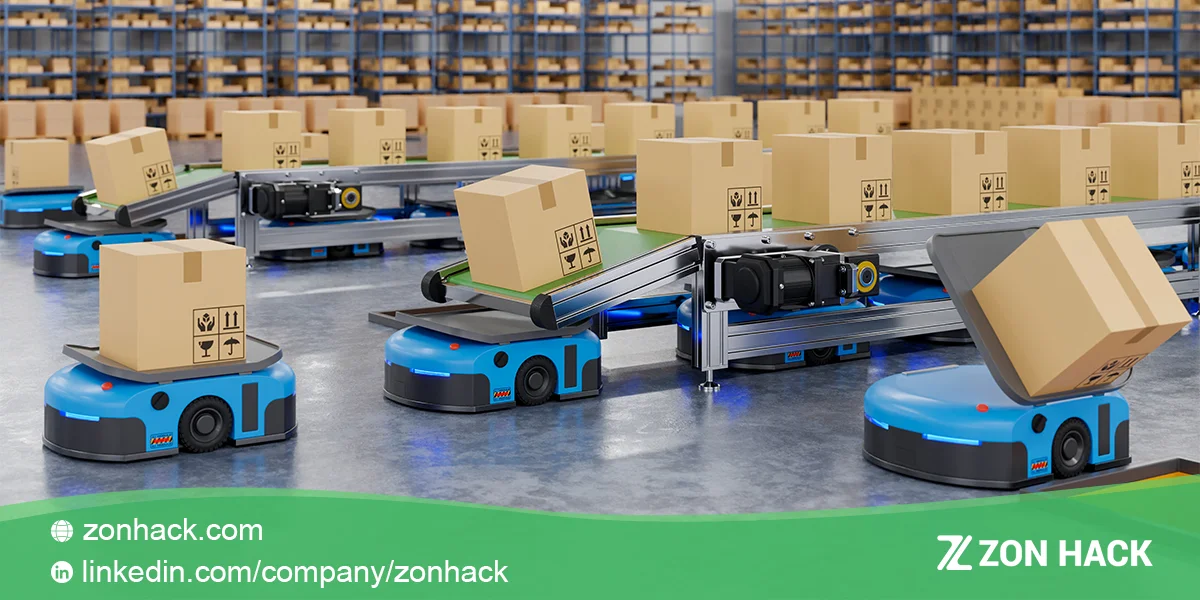
Amazon automation means handing repetitive parts of an Amazon business to software, to a service provider, or to both. In practice it covers three different things: tools that automate tasks like repricing and reordering, agencies that manage your store for a fee, and “done-for-you” investment schemes that promise passive income. The first two are legitimate. The third is where most of the money gets lost.
We manage Amazon accounts for a living, so treat what follows as a practitioner’s view rather than a sales pitch for the concept.
The three things people mean by Amazon automation
1. Task automation (software). Repricing tools, inventory reordering, review requests, PPC rules, feed management. You still run the business; the software removes the clicking. This is the version I recommend to almost everyone.
2. Managed service (an agency). A team runs listings, advertising, inventory planning, and account health on your behalf. You keep ownership of the account and approve the strategy. This is what our account management service does, and it is automation only in the sense that the work leaves your desk.
3. “Automated store” investment offers. A company builds and runs a store, you fund the inventory, and profits are supposedly split. This is the model regulators have repeatedly acted against. More on that below, because it deserves the warning.
What an automated Amazon store actually involves
Strip away the marketing and a genuinely automated operation looks like this:
- Repricing adjusts prices against competitors within rules you set. In our experience several of these, and the floor setting matters more than the algorithm.
- Inventory reordering triggers purchase orders from forecast sell-through rather than a guess.
- PPC rules raise, lower, or pause bids on thresholds you define.
- Order and feed management syncs listings and orders across channels.
- Buyer messaging sends review requests inside Amazon’s policy limits.
None of that is passive. Someone still chooses products, negotiates with suppliers, sets the rules, and reads the reports. I’ve never seen a hands-off Amazon business that stayed profitable, and I’ve looked at plenty.
Where automation genuinely helps
Time. Repricing and reordering are the two jobs that eat evenings. Automating them buys back hours every week, which is the real return.
Consistency. Rules do not forget. A reorder point checked by software beats one checked when you remember.
Fewer stockouts. Forecast-driven reordering is the single biggest operational win for most sellers, because a stockout costs you rank as well as sales. Good inventory management software pays for itself on one avoided stockout.
Faster reaction. Price and bid changes happen at machine speed rather than at your convenience.
Where automation fails
Products. No tool picks a winning product. That is research and judgment, and our product research service exists precisely because software cannot do it.
Suppliers. Nothing automates a supplier relationship, and the terms you negotiate outrank any software you buy. I’ve found sourcing is where the real margin hides.
Account health. When Amazon suspends a listing, a human has to read the policy and write the appeal. Automation cannot argue.
Strategy. Rules execute decisions. They do not make them. I audit rule sets monthly for exactly this reason, because unattended rules drift into expensive habits.
The “passive income” warning
If an offer promises guaranteed returns from an automated Amazon store in exchange for an upfront fee and your inventory funding, treat it as a red flag. The FTC has taken enforcement action against several such schemes, and the pattern repeats: high fees, thin margins, unsold stock left in your name, and a suspended account you legally own.
Honest questions to ask any provider:
- Who owns the seller account? It must be you. Always.
- What exactly is guaranteed? Legitimate operators guarantee work, never profit.
- Who funds inventory, and who owns unsold stock? Get this in writing.
- What happens if the account is suspended? Ask who handles the appeal.
- Can I see reporting on live accounts? Vague screenshots are not evidence.
If the answers are evasive, walk. In our experience, the sellers who get hurt are not naive; they are busy, and they take a plausible pitch at face value.
How to introduce Amazon automation without breaking anything
In our experience this sequence is the order that avoids expensive surprises.
Step 1: measure before you automate. Spend two weeks logging where your hours actually go. Most sellers guess wrong. I’ve found the real time sink is usually reordering decisions and supplier chasing, not the tasks people rush to automate first.
Step 2: automate the reversible things first. Review requests and reporting cause no damage if the rules are wrong. Repricing and bid changes spend money. Start where mistakes are cheap.
Step 3: set hard floors. Every repricer needs a minimum price that protects your margin after all Amazon fees and your landed cost. Without a floor, a competitor’s clearance sale drags you into selling at a loss. We have seen exactly that happen inside a single weekend.
Step 4: automate one SKU group at a time. Pick your least important products for the first rules. If something misfires, you learn on stock that does not matter.
Step 5: schedule the review. Rules need an owner and a date. Ours get reviewed monthly, and roughly a third get changed each time, which tells you how much accounts drift.
Step 6: keep a manual override. Prime Day, a viral moment, a supplier delay: these are the times to switch rules off and think. Automation has no idea what quarter it is.
The sellers who get value from Amazon automation treat it as delegation with supervision. The ones who lose money treat it as absence.
What automation costs, realistically
Tool pricing usually scales with catalog size and order volume, from tens of dollars monthly for a single-purpose repricer to a few hundred for a full suite covering inventory, pricing, and advertising rules.
Managed service is priced differently: a retainer for the work, sometimes with a share of ad spend. The comparison that matters is not tool versus agency. It is what an hour of your time is worth against what the alternative costs. If reordering eats six hours a week and a tool costs a hundred dollars a month, the arithmetic is not subtle.
What I would not do is buy a full suite in month one. Start with the single worst job in your week, automate that, and let the next purchase justify itself.
A sensible automation stack for most sellers
| Job | Automate? | Notes |
|---|---|---|
| Repricing | Yes | Set floors so you never sell below margin |
| Reordering | Yes | Forecast-based, reviewed monthly |
| PPC bid changes | Partly | Rules for routine, humans for launches |
| Review requests | Yes | Within Amazon’s policy only |
| Listing copy | No | Reads generic, converts worse |
| Supplier negotiation | No | Relationship work |
| Suspension appeals | No | Needs a person who reads policy |
Start with reordering and repricing. Add PPC rules once you understand your own account. That order has served every client I’ve set up this way.
FAQ
Is Amazon automation legal?
Automating tasks with software and hiring an agency are both entirely legitimate. What draws regulatory attention are passive-income schemes that promise guaranteed returns, and some have been prosecuted for deceptive claims.
Can an Amazon store really run itself?
No. Software handles repetition, and an agency can handle execution, but products, suppliers, pricing strategy, and compliance still need decisions. Anyone selling you otherwise is selling a story.
How much does Amazon automation cost?
Tools commonly run from tens to a few hundred dollars monthly depending on catalog size. Managed service is typically a retainer, sometimes with a performance element. We quote after a free consultation because scope drives the number.
What is the difference between automation software and an Amazon agency?
Software removes clicks and leaves the decisions with you. An agency takes on the work and the judgment, reporting back. Many sellers end up using both, which is a perfectly sensible outcome.
What should I automate first?
Inventory reordering, then repricing. Those two remove the most hours and prevent the most expensive mistake, which is running out of stock on a ranking product.
Last updated: August 24, 2026.