
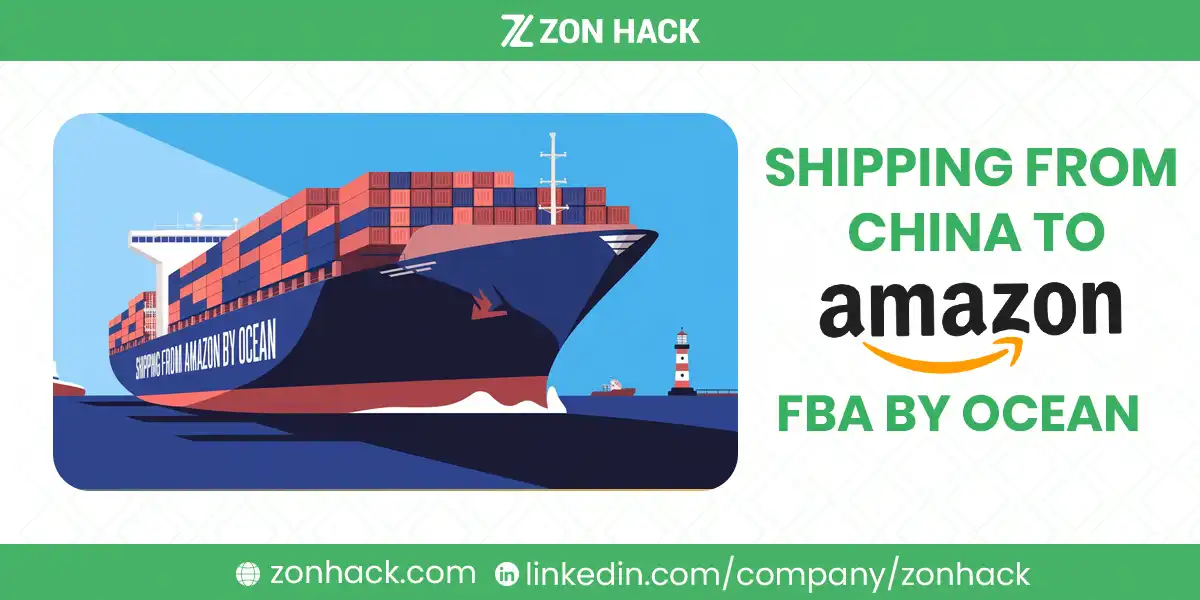
Shipping from China to Amazon FBA by ocean costs a fraction of air freight and takes roughly four to eight weeks door to door. It suits any order big enough to fill a decent share of a box. It punishes anyone who plans late. The single most useful decision you can make is to route the container through a prep center or 3PL rather than sending it straight to an Amazon warehouse.
We take clients through this sequence regularly, so what follows includes the parts that go wrong rather than only the parts that work.
The whole process, in order
Most people searching this want the sequence rather than the freight theory. Here it is, and the sections below go deeper on each.
- Decide the mode. Ocean for anything that is not urgent, air for small or time-critical shipments. The comparison is below.
- Appoint a freight forwarder before you place the production order, not after. They will tell you things about your packaging and paperwork that change what you order.
- Agree the Incoterm with your supplier. This decides who carries the risk and where their responsibility ends, and it is the single clause that causes most disputes.
- Ship to a prep center or 3PL, not into an Amazon warehouse. This is the most important line on the page and the reason has its own section.
- Clear customs through a licensed broker, with a designated importer of record.
- Inspect and relabel at the prep center, then forward into FBA in the shipment sizes Amazon asks for.
Total door to door: roughly four to eight weeks by ocean, one to two by air. The part people underestimate is the beginning, because appointing a forwarder and agreeing terms takes longer than expected and it happens while production is already running.
Can you ship from China directly to Amazon FBA?
Technically yes, and I’d advise against it in almost every case.
Amazon will accept a delivery from overseas if the paperwork is right, but the arrangement puts you in a bad position. You have no opportunity to inspect the goods, no chance to fix labeling before Amazon sees it, and no buffer if Amazon rejects the shipment. A rejected delivery at a fulfillment center is an expensive problem to solve from another continent.
There is also a customs point that catches people. Amazon will not act as importer of record. You need your own IOR arrangement regardless of where the container goes, so shipping direct does not remove the customs work, it only removes your chance to check anything.
The ship-from address problem
A detail that generates more support cases than it should. When you create the FBA shipment, the ship-from address determines which fulfillment centers Amazon assigns and, in some marketplaces, how tax is treated.
Putting a Chinese address there when the goods are actually forwarding from a US prep center produces confusing assignments and occasionally blocked shipments. Use the address the goods physically ship from, which after routing through a prep center is the prep center.
How to choose a freight forwarder for Amazon FBA
The forwarder matters more than the carrier, and this is where most of the avoidable pain comes from. Our guide to choosing a freight forwarder for Amazon FBA covers Amazon Global Logistics, independent forwarders and the questions to ask.
What I’d ask before appointing one:
- Do you handle Amazon FBA shipments specifically? FBA has requirements ordinary freight does not: appointment scheduling, carton labeling, box weight and dimension limits. A forwarder who does not know them will get a delivery refused.
- Are you a licensed NVOCC or freight forwarder, or a broker reselling space? Both work. The difference shows up when something goes wrong and you need somebody with actual authority over the container.
- Who is the importer of record on this shipment? If the answer is vague, stop.
- What is included in the quote? The common gap is destination charges: port fees, chassis, delivery, and the customs entry itself. A quote that looks dramatically cheaper usually excludes them.
- What happens if the container is held? Ask for the demurrage and detention terms in writing before you book.
A practical filter I’d use: ask them what they do about prep and labeling. A forwarder who immediately talks about routing through a prep center understands FBA. One who offers to deliver straight to Amazon is telling you they have not done this often.
Ocean versus air: when each makes sense
| Factor | Ocean freight | Air freight |
|---|---|---|
| Cost per kg | Lowest | Several times higher |
| Transit, port to port | 20 to 40 days | 3 to 8 days |
| Door to FBA, realistic | 5 to 9 weeks | 1 to 2 weeks |
| Best for | Bulk restocks, heavy goods | Launches, urgent restocks, samples |
| Risk | Delay compounds | Cost compounds |
The honest rule, I think, is simple. Ocean for anything planned, air for anything forgotten. Sellers who air-freight regularly are usually paying for a forecasting problem rather than a shipping one, which is why inventory planning saves more money than freight negotiation.
FCL or LCL?
FCL (Full Container Load) means you book a whole container: 20ft holds roughly 25 to 28 cubic meters of usable space, 40ft roughly double. You pay per container regardless of how full it is.
LCL (Less than Container Load) means your pallets share a container with other shippers. You pay per cubic meter.
The crossover sits around 12 to 15 cubic meters in most lanes. Below that, LCL usually wins. Above it, FCL often costs less per unit and, more importantly, moves faster: LCL adds consolidation at origin and deconsolidation at destination, which is where the hidden weeks live.
LCL quotes also tend to hide more fees, honestly. Always ask for an all-in figure rather than an ocean rate.
Incoterms decide who carries the risk
New importers lose money here. Worth being precise, then.
EXW (Ex Works). You take over at the factory door. Maximum control, maximum work, and you own every problem including export clearance in China. Not a beginner’s term, in my view.
FOB (Free On Board). The supplier delivers to the port and handles export clearance. You own the goods from there. This is the sensible default for most Amazon sellers, and it is the one I recommend.
CIF (Cost, Insurance, Freight). The supplier arranges shipping to your destination port. Convenient, and destination charges are frequently inflated by the agent your supplier chose. I’d avoid it unless you have checked those charges in advance.
DDP (Delivered Duty Paid). Someone else handles everything including duty. Genuinely easy and popular for small shipments, but I’d always verify who is named as importer of record, because DDP arrangements sometimes use paperwork you would not sign yourself.
Quote FOB, control your own freight forwarder, and you will understand your costs. That single change fixes most freight complaints I hear.
What ocean freight actually costs
Rates shift constantly with fuel, capacity, and season. Any figure printed in a guide is stale within weeks. What matters is knowing every line that will appear:
- Ocean freight itself, per container or per cubic meter.
- Origin charges: export clearance, terminal handling, documentation.
- Destination charges: terminal handling, customs entry, delivery order.
- Customs duty and tariffs, based on your HTS code and country of origin.
- Customs broker fee and a bond, single-entry or annual.
- Drayage from port to your prep center or warehouse.
- Peak season surcharges, which appear from roughly August through October.
- Demurrage and detention if the container sits too long. This is the one that surprises people, and it accrues daily.
Insist any forwarder itemises those lines. I would not accept less. A single number is a red flag rather than a simplification.
Never ship straight into Amazon
I repeat this advice more than any other. Sellers ignore it until it bites.
Amazon fulfillment centers are not designed to receive containers. Deliveries need appointments, pallets must meet specification, cartons need compliant FNSKU labels, and Amazon splits shipments across multiple warehouses. A container arriving unannounced with non-compliant pallets gets refused, and refusal at the door is expensive.
Route through a prep center or 3PL instead. Always. They receive the container, check the goods, label and repack to Amazon’s requirements, then send the right quantities to the right warehouses on Amazon’s schedule. Our guide to FBA prep centers covers choosing one, and our global shipping and logistics service handles factory-to-FBA as a single job.
It also gives you a place to hold stock when Amazon imposes restock limits, which alone justifies the extra handling.
Paperwork you will need
- Commercial invoice and packing list from your supplier.
- Bill of lading, your title to the goods.
- Importer of record details, which should be you.
- HTS classification for duty. Get this right; misclassification is a compliance problem, not a saving.
- ISF filing for US imports, due before the vessel sails. Late filing carries penalties.
- Certifications for regulated goods: FDA, FCC, CPSC, and similar.
Your broker files most of this. Accuracy depends on paperwork your supplier prepares, though. Check them yourself before the vessel sails.
A timeline that survives contact with reality
Working backwards from the date you need stock sellable:
- Production: 20 to 40 days, depending on the factory and whether it is peak season.
- Pre-shipment inspection: 3 to 5 days, and worth every hour. A production inspection is far cheaper than a container of defects.
- Booking and origin handling: 5 to 10 days.
- Ocean transit: 20 to 40 days, lane dependent.
- Customs clearance: 2 to 7 days, longer if examined.
- Drayage and prep: 5 to 10 days.
- Amazon receiving: 3 to 14 days, and slower in Q4.
Two to four months, purchase order to sellable. That is the honest arithmetic. For Q4 stock, I would have goods leaving China by early September at the latest. Every year, sellers who book in October discover that everyone else did too.
Five mistakes that cost real money
- Booking during Chinese New Year without planning. Factories close for weeks and the pre-holiday rush degrades quality. Order early or wait.
- Accepting CIF from the supplier’s agent. Destination charges then arrive as a surprise.
- Skipping inspection to save a few hundred dollars on a container worth tens of thousands.
- Leaving containers at the port. Demurrage accrues daily and nobody warns you kindly.
- Underinsuring. Cargo insurance is cheap relative to a container lost overboard, which does happen.
FAQ
How do you ship from China to Amazon FBA?
Six steps: choose air or ocean, appoint a freight forwarder before production finishes, agree the Incoterm with your supplier, ship into a prep center rather than into Amazon, clear customs through a licensed broker with your own importer of record, then forward into FBA after inspection and labeling. Ocean takes four to eight weeks door to door, air one to two.
Can you ship directly from China to Amazon FBA?
Technically yes, and it is rarely wise. Shipping direct removes your chance to inspect the goods or fix labeling before Amazon sees them, and leaves no buffer if a shipment is rejected. It also does not avoid the customs work, since Amazon will not act as importer of record either way.
How do I choose a freight forwarder for Amazon FBA?
Ask whether they handle FBA shipments specifically, since FBA has labeling, appointment and carton requirements ordinary freight does not. Confirm who is importer of record, get destination charges itemized rather than quoted as a single door rate, and get demurrage terms in writing. A forwarder who suggests routing through a prep center understands FBA; one who offers direct delivery usually does not.
How long does shipping from China to Amazon FBA take by ocean?
Port to port is typically 20 to 40 days depending on the lane. Add production, customs, drayage, prep, and Amazon receiving, and plan on two to four months from purchase order to sellable inventory.
Is ocean freight cheaper than air for Amazon FBA?
Substantially, per kilogram. Air only wins when the cost of being out of stock exceeds the freight premium, which is genuinely the case during a launch or a stockout on a ranking product.
Can I ship a container directly to an Amazon warehouse?
Technically sometimes, practically no. Amazon requires appointments, compliant pallets and labels, and usually splits shipments across warehouses. Route through a prep center or 3PL instead; refusals at the door are expensive.
What Incoterm should Amazon sellers use?
FOB for most situations, because your supplier handles export clearance while you keep control of the freight and understand your costs. DDP suits small shipments if you verify who acts as importer of record.
Do I need a customs broker?
For commercial imports, effectively yes. A broker files your entry, advises on classification, and arranges your bond. The fee is small against the cost of a misfiled entry.
What is demurrage and how do I avoid it?
Demurrage is a daily charge for leaving a container at the terminal beyond the free period. Avoid it by arranging drayage before the vessel arrives and confirming your prep center can receive on the planned date.
Last updated: August 24, 2026. Freight rates, surcharges, and customs requirements change frequently; confirm current figures with your forwarder and broker.