
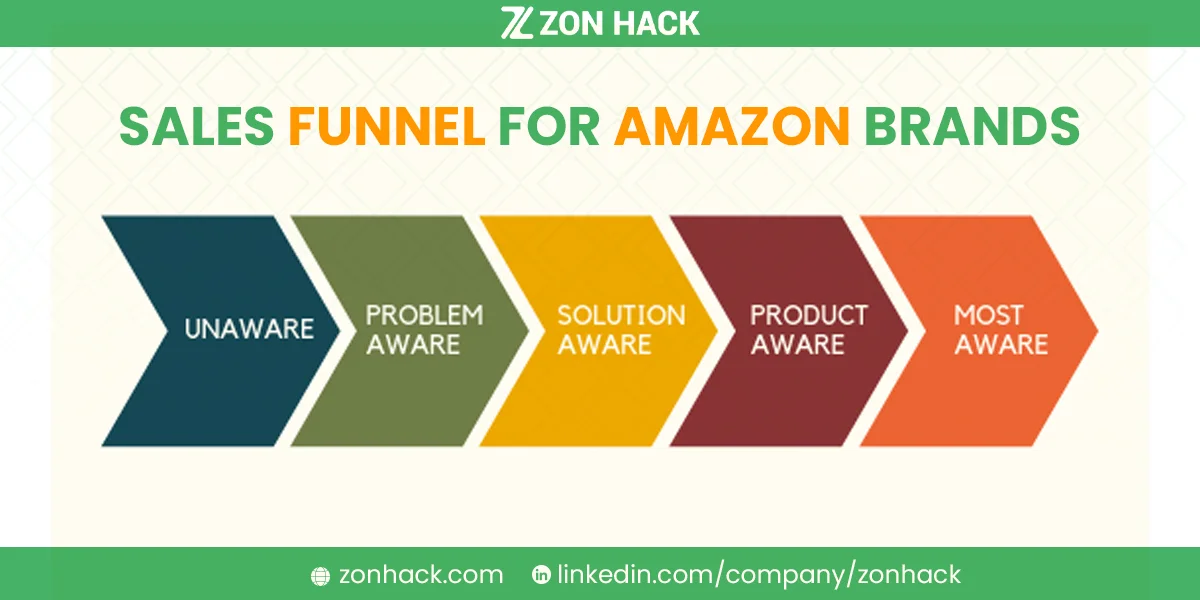
An Amazon sales funnel is the path a shopper takes from first hearing about your brand to buying repeatedly, built out of the tools Amazon actually gives brands: Sponsored ads and Posts for awareness, a Brand Store for consideration, the detail page for conversion, and Subscribe and Save plus brand follower messaging for retention.
Start there, because most funnel advice written for Amazon brands is generic marketing content with the word Amazon inserted, and it leads people somewhere they are not allowed to go.
The constraint that shapes everything: you cannot take the email addresses attached to your Amazon orders and market to those people. Amazon’s buyer communication policy limits order-related messaging to fulfillment and customer service. No newsletters, no promotions, no links out. A funnel diagram that ends with “capture their email and nurture them” describes a policy violation when the purchase happened on Amazon.
That is not the end of list building. It changes where in the funnel it happens, which is what the second half of this guide covers. We build these for client brands as an Amazon SPN Verified Partner, and in my experience the compliant version outperforms the version people try to smuggle past the rules anyway.
The five stages, mapped to real Amazon tools
Forget the generic funnel for a moment. Here is what each stage looks like with tools that exist.
| Stage | What you are doing | Amazon tools that do it |
|---|---|---|
| Awareness | Reaching people who do not know you | Sponsored Brands, Sponsored Display, Amazon DSP, Posts, external traffic |
| Consideration | Being compared and chosen | Brand Store, A+ Content, images, video, reviews |
| Conversion | Closing the sale | Detail page, price, Prime badge, promotions |
| Retention | Getting the second purchase | Subscribe and Save, brand follower messaging, Tailored Audiences |
| Advocacy | Turning buyers into proof | Reviews via Request a Review, Vine for new products |
Two things stand out when you lay it out this way. Amazon owns the middle of the funnel almost entirely, and the retention stage has more compliant tools than most brands use.
Stage one: awareness
The mistake here is spending awareness money before the rest of the funnel can hold it. I’d fix the detail page first, every time.
Sponsored Brands puts your logo, a headline, and a product range at the top of search, and can send clicks to your Brand Store rather than a single listing. That is a funnel decision, not a formatting one.
Sponsored Display reaches shoppers on and off Amazon and retargets people who viewed your products. The lookback window now extends far beyond 30 days, which matters for anything with a long consideration cycle.
Amazon DSP buys audiences rather than placements, including people who are not currently shopping. Our comparison of Amazon DSP and Sponsored Display covers when that is worth the step up, and for most brands the honest answer is not yet.
Posts is Amazon’s free browsable feed of brand content. Low effort, low ceiling, worth doing.
A caution on sequencing that costs brands real money. Awareness spend is measured on a longer horizon than conversion spend, so pouring budget into upper funnel formats and then judging them on last click attribution in week 2 produces a predictable conclusion: cancel everything. I’d give a genuine awareness test 90 days and read it against branded search volume and new-to-brand orders rather than campaign ACoS. Anything shorter tells you about noise.
External traffic from social, creators, or search. Two rules make it work rather than waste money: tag every link with Amazon Attribution so you can see what converts, and claim the Brand Referral Bonus, which credits Brand Registered sellers roughly 10% on average against referral fees for sales driven from outside Amazon. In our experience campaigns with, and without that credit applied and it changes which channels look viable.
Stage two and three: consideration and conversion
On Amazon these blur into one another, because the same page does both jobs.
The Brand Store is your closest thing to a landing page inside Amazon. Group products by problem or use case rather than by type, give each collection a real reason to exist, and treat it as the destination for every branded ad and external link. Our guide to the Amazon storefront link covers building one and using it properly.
The detail page does the closing. Images, title, bullets, A+ Content, video, price, reviews. Nothing upstream matters if this converts badly, which is why our guide to the product detail page is the one I’d read before any of the advertising guides.
Comparison behavior is the whole game here. Shoppers on Amazon open four tabs. Your page is being read against three competitors, so write it against them rather than in isolation. Our guide to listing optimization covers the order of impact.
Stage four: retention, done compliantly
This is where brands either build something durable or leak every customer they paid to acquire.
Subscribe and Save is the strongest retention tool on the platform for consumables. It converts a one time buyer into recurring revenue without any messaging at all. I’ve found brands underuse it because the discount looks like a margin loss on a spreadsheet, which ignores that the second and third orders cost nothing to acquire.
Brand follower messaging. Amazon’s customer engagement tools let Brand Registered sellers email people who have chosen to follow the brand on Amazon. This is the compliant channel, it goes through Amazon, and it exists precisely because the order-email route does not. Comparatively few brands use it.
Tailored Audiences lets brands build segments from their own Amazon customer behavior, such as repeat purchasers or high spenders, and target them through advertising. Again, compliant, and again, underused.
Request a Review sends Amazon’s own standardized review request. It is the safe version of review solicitation, since you are not writing the message and cannot bias it.
Amazon Marketing Cloud gives advertisers a clean room view of how their campaigns interact across the funnel, without exposing individual customer data. Worth exploring once you are spending enough for the analysis to change decisions.
Building a list, legitimately
You want an email list. Here is where it can actually come from.
Capture before Amazon, not after. Run your own landing page, offer something genuinely useful, collect the address there, then send that traffic to Amazon to buy. The list is yours because the relationship started on your property. This is the whole trick, and it inverts the usual funnel diagram.
Use product inserts carefully. A card offering warranty registration, a user guide, or genuine support can invite customers to your site. It must not offer anything in exchange for a review, must not steer buyers toward positive reviews, and must not disparage Amazon. The line here is real and crossing it is a policy violation.
Build on channels you own. Social followings, a creator relationship, a community. Slower, and nobody can take it away.
Sell somewhere you own too. A Shopify store alongside Amazon gives you the customer record Amazon will never hand over. Plenty of brands run both for exactly this reason, and in my experience the second channel pays for itself in data before it pays for itself in revenue.
What I would not do is scrape order reports for addresses and import them into an email platform. It violates Amazon’s terms, it likely violates data protection law depending on your market, and I have seen accounts suspended over exactly this.
What to fix first
If you are building this from nothing, the order matters more than the completeness.
- Fix conversion on your best selling detail page. Everything downstream multiplies this number.
- Build the Brand Store so branded traffic has somewhere worth landing.
- Get Sponsored Products efficient before adding any other format.
- Turn on Subscribe and Save if you sell anything consumable.
- Start brand follower messaging, since it costs nothing and compounds.
- Add awareness spend only once the four steps above hold.
- Then build the off-Amazon list, with Attribution tagging and the Brand Referral Bonus claimed.
In our experience brands skip to step six because it feels like marketing, then conclude that Amazon advertising does not work. The advertising worked. The funnel underneath it did not exist.
If you would rather have this built and run rather than assembled piecemeal, that is what our Amazon account management service and advertising management do together.
FAQ
What is an Amazon sales funnel?
The path a shopper takes from first hearing about your brand to buying repeatedly, built from Amazon’s own tools: Sponsored ads and Posts for awareness, a Brand Store and detail page for consideration and conversion, and Subscribe and Save plus brand follower messaging for retention.
Can I email my Amazon customers?
Not from order data. Amazon’s buyer communication policy restricts order-related messaging to fulfillment and customer service, with no marketing content or external links. Brand Registered sellers can email brand followers through Amazon’s customer engagement tools, which is the compliant channel.
How do I build an email list as an Amazon seller?
Capture addresses before the Amazon purchase rather than after, using your own landing page with traffic you then send to Amazon. Product inserts can invite customers to your site for warranty or support, but must never offer anything in exchange for a review.
What is the Brand Referral Bonus?
A credit against Amazon referral fees for Brand Registered sellers who drive external traffic to their listings, averaging around 10% of qualifying sales. It requires Amazon Attribution tagging and materially changes whether external advertising pays for itself.
Should I send external traffic to my listing or my Brand Store?
Usually the Brand Store, since shoppers arriving from brand advertising want to browse rather than buy one specific item. Send traffic to a single listing when the ad promoted that specific product and intent is already narrow.
Do product inserts violate Amazon policy?
Not inherently. Inserts offering warranty registration, instructions, or genuine support are permitted. They become violations when they offer anything in exchange for a review, steer buyers toward positive reviews, or direct customers away from Amazon in prohibited ways.
Last updated: August 29, 2026. Amazon’s buyer communication policies, customer engagement tools, and Brand Referral Bonus terms change. Seller Central program policies carry the current rules, and policy compliance is your responsibility rather than any article’s.