Amazon has almost no presence in West Virginia, and most published lists for this state are
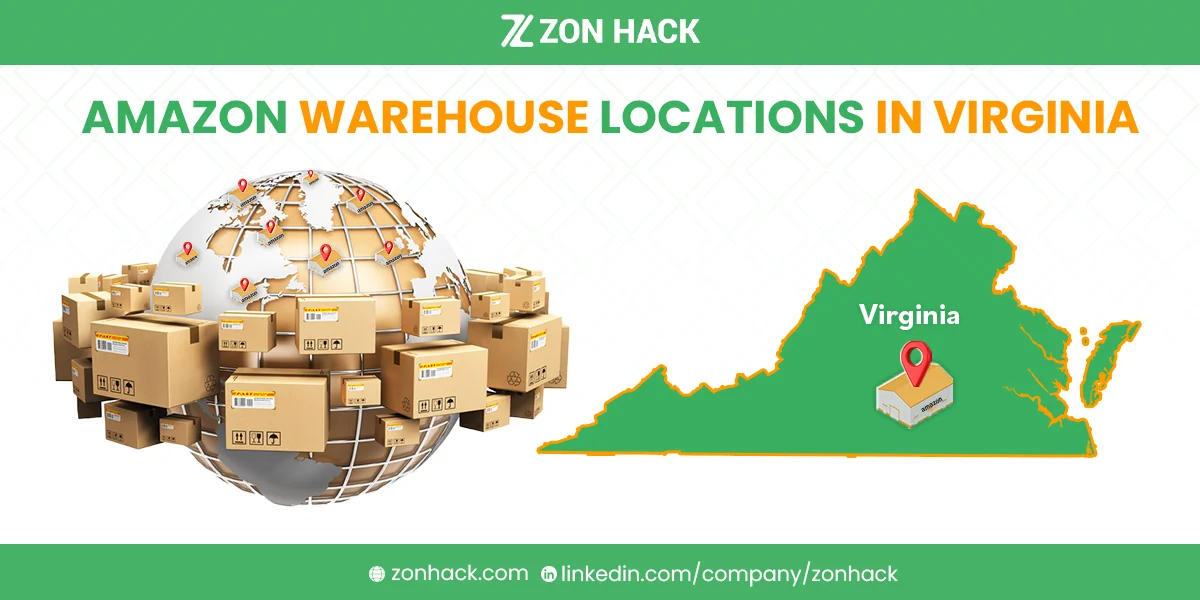
wrong. The facilities usually named are in Virginia, a different state, and we know that because
the previous version of this page made the same mistake.
The one Amazon-linked site our records place inside West Virginia is at Inwood, in Berkeley County,
in the eastern panhandle. Everything else serving the state sits in Virginia, Maryland, Ohio, or
Pennsylvania. In our experience this is the single most misreported state page on the web, and I’d
distrust any list that says otherwise without showing addresses.
The short version in numbers: 1 West Virginia facilities on record, 0 of
them carrying a published facility code, spread across 1
distinct facility types. The full breakdown is below.
Came here from a tracking page with a code you did not recognize? The table below carries every West Virginia facility on our record, with its code, address, and type. Use your browser’s find function. A code that is missing usually belongs to a neighboring state, which in my experience worries people far more than it should.
Every Amazon facility in West Virginia
1 facilities, of which 0 have a published code: 1 third-party partner site.
| Code | Address | ZIP | Type | County |
|---|---|---|---|---|
| (not listed) | 5491 Tabler Station Rd, Inwood, WV | 25428 | Third-party partner site | Berkeley |
Addresses are compiled from public listings. Amazon opens, closes, and repurposes buildings
continually, and no facility on this list accepts visitors or takes calls about individual
parcels, which is why we do not publish site phone numbers.
The codes people search alongside West Virginia
This is the part most worth reading, because the two most-searched codes are not in West Virginia.
- WCH2 is a distribution center at 2712 W Main St in Waynesboro, Virginia. It draws the most
searches reaching this page and it is not a West Virginia facility. - BWI4 is a fulfillment center at 165 Business Blvd in Clear Brook, Virginia, near
Winchester. BWI is Baltimore’s airport code, which is a further clue that it is not a West Virginia
building. - WWV8, WWV9, and XMD3 are searched occasionally and none appears in our records. The WWV
prefix suggests West Virginia and XMD suggests Maryland, but we will not publish addresses we
cannot support.
There is no Amazon fulfillment center code for West Virginia in our records. If your code is not
here, a facility in Virginia, Maryland, Ohio, or Pennsylvania is the likeliest answer.
Why the confusion happens, and what actually serves you
The mistake is easy to make. It is also worth dissecting, because you will encounter it elsewhere.
West Virginia wraps around Virginia’s northern edge awkwardly, and several Amazon buildings sit just
over the line in Frederick County (Clear Brook) and Waynesboro, both in Virginia. Close to
West Virginia. Prominent in regional searches. Routinely filed under the wrong state. I’ve found this
error propagates because everyone copies everyone. WCH2, the code most often searched alongside West
Virginia, is a distribution center in Waynesboro, Virginia, which our
Virginia listing covers properly.
So where does your parcel actually come from? It depends which part of the state you are in, and West
Virginia is unusually fragmented:
- The eastern panhandle (Martinsburg, Charles Town, Inwood) is functionally part of the
Washington and Baltimore orbit and is served from Virginia and Maryland. - The northern panhandle (Wheeling, Weirton) sits closer to Pittsburgh and Columbus than to
Charleston, and is served from Pennsylvania and Ohio. - The southern and central counties, including Charleston, Huntington, and Beckley, are served
across mountainous terrain from Ohio, Kentucky, and Virginia.
Topography is the real story here. West Virginia is the most mountainous state east of the
Mississippi. Gradients, switchbacks, and narrow valley roads all slow a truck in ways a mileage figure
never reveals, which is why an address 40 miles from a depot can behave like one twice that far away.
I’d budget extra everywhere except the panhandles. Winter widens the gap again.
A word about the panhandles, since they behave so differently from the rest of the state that lumping
them together misleads.
The eastern panhandle is commuter territory. Martinsburg and Charles Town residents drive into
Maryland and Virginia daily, property values track the Washington market, and freight arrives on the
same trucks serving Winchester and Hagerstown. Delivery there is unremarkable, and I’d expect it to
behave like a Virginia address rather than a West Virginia one.
The northern panhandle behaves like Appalachian Ohio. Wheeling sits closer to Pittsburgh than to its
own capital, and its supply lines run north and west rather than south. When I have traced deliveries
there, Pennsylvania and Ohio codes came up far more often than anything local.
Between those strips lies the actual bulk of the state: narrow valleys, sparse settlement, switchback
highways, and coal country infrastructure built for extraction rather than parcel distribution.
Charleston, Beckley, Huntington, and Morgantown each occupy their own pocket. When I have compared
promises across those four, they behaved like four different states. That fragmentation, more than any absence of Amazon buildings, explains why residents experience such
inconsistent delivery timing depending on which pocket they occupy. I’d weigh terrain above mileage
here. In our experience it predicts the outcome better.
What it means when your parcel is at one of these
Knowing what kind of building your parcel is sitting in changes how much patience the situation
deserves, and in our experience most people worry at exactly the wrong moment.
Inventory lives at a fulfillment center, so a parcel scanned there has generally not been picked
and packed yet. A sortation center deals only with packed parcels, sorting them toward the right
region. A delivery station is the final stop before a van, and I’d expect delivery within a day
or so of seeing one. Our guide to the different types of Amazon warehouse
covers what happens inside each, and sortation center versus fulfillment center
covers the pair people confuse most.
On the codes themselves, a caution. Amazon does not publish how it names facilities, which
means any lookup table circulating online is somebody’s inference. The leading D for a delivery
station is the one convention that mostly survives scrutiny. For everything else, in our experience
the type column above is the safer guide than anything the letters appear to suggest.
If the parcel has stopped moving entirely, our guide to what a carrier delay means
covers how long to wait before it is worth doing anything, and our guide to
a disappeared order covers the case where
the order itself has vanished from your account rather than the parcel from the network.
If your code is not on this list
Plenty of people arrive here, search for their code, and find nothing. I’d not treat that as a
dead end, because there are only a few explanations and none of them are alarming.
The building is over a state line. Much the commonest reason. Parcel networks pay no attention to
borders, and neighboring states routinely handle each other’s volume. In our experience this accounts
for the large majority of missing codes.
The facility is newer than this listing. Amazon opens buildings continually and no compiled list
keeps pace. If the code looks unfamiliar and recent, that is likely why.
The code belongs to a partner rather than to Amazon. Contracted delivery firms and third-party
logistics providers generate their own scan codes, which never appear on a list of Amazon facilities.
You misread a character. Genuinely common. Zero against O, one against I, five against S. When I
have chased a code that seemed not to exist, roughly half the time it was a transcription slip.
None of these change what you should do, which is wait for the tracking to update rather than
investigate the building.
Other Amazon buildings you may see in tracking
Beyond fulfillment, sortation, and delivery, several other building types appear in tracking,
and each explains a different oddity.
An air hub exists to move freight between regions by plane, so a scan there can put your parcel a
long way from anywhere you expected. A receive center, also called a cross-dock, takes bulk
inbound freight from manufacturers and splits it for onward distribution, meaning nothing inside is
assigned to a customer. Amazon Warehousing and Distribution holds bulk inventory upstream and
tops up fulfillment centers on its own schedule. Returns centers inspect and grade what comes
back. Third-party partner sites are contracted rather than owned, which is why the address
sometimes looks like an ordinary industrial unit.
In our experience these account for most of the tracking scans people cannot make sense of.
Visiting, calling, and collecting
One question worth answering before you ask it: none of these buildings are open to the
public. Fulfillment centers, sortation centers, and delivery stations do not accept visitors, do
not hold parcels for collection, and do not have a desk that will discuss your order. If you need to
collect something, Amazon Locker and Amazon Hub Counter locations are the designated points, and
they are entirely separate from the facilities listed here.
The same goes for phone numbers. Several published lists of Amazon facilities include site numbers,
and I’d ignore them. They ring switchboards that cannot look up an order, and in our experience
people waste an afternoon on that before calling Amazon customer service, which is where the
question belonged in the first place.
What a seller should take from this
Two things, and the first one is about data rather than about West Virginia.
Published facility lists are frequently wrong about state attribution. This page was wrong until
this rewrite. Check addresses. Ignore headings. A state name in a title is an assertion, not
evidence. In our experience that habit
catches more errors than any other single check.
For West Virginia specifically, there is almost nothing to plan around, and I’d rather say that
than pad the section. Send to Amazon assigns
your inbound destination, only fulfillment centers hold seller inventory, and our records place none
in the state. If a meaningful share of your customers are here, expect longer delivery promises and a
higher rate of weather-related delays, particularly in winter. Those affect your On-Time Delivery
Rate regardless of cause, which our guide to
what a carrier delay means covers.
The eastern panhandle is the exception worth noting. Martinsburg and Charles Town are close enough to
the I-81 corridor and the Washington market that delivery there behaves more like Virginia than like
the rest of West Virginia.
What this page is for, and what it is not. Worth being direct about, because I’ve found
readers assume more precision than any compiled list can offer.
The data comes from public listings, not from Amazon, so it lags reality in both directions:
recently closed sites may persist, recently opened ones may be missing. The type column repeats what
those listings said. In our experience it holds up well, though not perfectly.
Treat the page as a lookup for a code you already have and as a way to place your parcel in the
sequence. I’d not treat it, or any similar list, as an exact census of Amazon’s buildings.
FAQ
Does Amazon have a warehouse in West Virginia?
Almost nothing. Our records place one Amazon-linked site inside the state, at Inwood in Berkeley
County. Most facilities published elsewhere as West Virginia warehouses are actually in Virginia.
Why do West Virginia warehouse lists show Virginia addresses?
Because several Amazon facilities sit just over the state line in Frederick County and Waynesboro,
Virginia, close enough to appear in regional searches. They are routinely attributed to the wrong
state, including by the earlier version of this page.
Where is WCH2?
WCH2 is a distribution center at 2712 W Main St in Waynesboro, Virginia, not in West Virginia. It is
the code most often searched alongside West Virginia, which is why the confusion persists.
Which states serve West Virginia deliveries?
It depends on the region. The eastern panhandle is served from Virginia and Maryland, the northern
panhandle from Pennsylvania and Ohio, and the southern and central counties from Ohio, Kentucky, and
Virginia.
Why is Amazon delivery slower in West Virginia?
Because the state has almost no local capacity and is the most mountainous east of the Mississippi.
Terrain slows freight in ways distance alone does not capture, and winter widens the gap further.
Is there an Amazon fulfillment center code for West Virginia?
Not in our records. Codes searched alongside the state, including WCH2 and BWI4, belong to Virginia
facilities. If your code is not listed here, a building in Virginia, Maryland, Ohio, or Pennsylvania
is the likeliest explanation.
Last updated: August 30, 2026. Compiled from public listings; Amazon’s facility network changes
continually and this page will lag it. Facilities do not accept visitors or handle parcel
inquiries. For warehouse employment, Amazon’s own hiring site carries current openings and is
the only accurate source.