
Amazon business credit comes in four shapes: Pay by Invoice terms for buyers, a revolving Amazon Business line of credit, the Amazon Business American Express card, and Amazon Lending offers for sellers. Which you qualify for depends on account history and standing rather than an application you can push through. Outside Amazon, ordinary business credit and supplier terms often beat all four.
One distinction to fix before anything else: buyer-side credit and seller-side lending are different products, and they get conflated constantly. Pay by Invoice helps you buy inventory on Amazon. Amazon Lending helps you fund inventory you sell on Amazon.
The four Amazon business credit options
1. Pay by Invoice
Net terms on Amazon Business purchases. Goods now, payment later, on an agreed date.
Handy for smoothing cash flow on supplies and equipment. I use it that way myself. Easy to over-rely on, too: terms tighten when payments slip, and buying privileges are what get restricted first.
2. Amazon Business line of credit
A revolving line for Amazon Business purchases. Amazon does not issue it; a lending partner does.
Expect a standard credit assessment on the business and often a personal guarantee. Registered businesses with trading history fare best. Newer entities rarely do. Sole traders and very new entities are frequently declined, which is worth knowing before you apply and collect a credit search.
3. Amazon Business American Express Card
A co-branded card. You pick rewards or extended payment terms, never both.
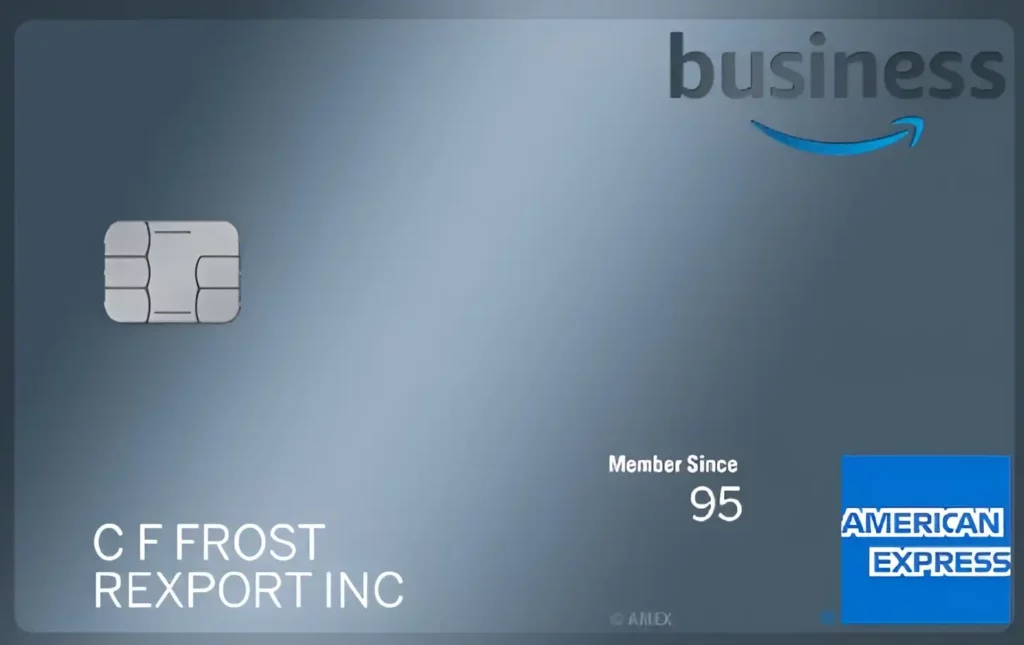
Choose deliberately. Extended terms help cash flow; points help margin only if you were spending anyway. I check landed cost per unit before deciding either way, because rewards on an unprofitable purchase are still a loss.
4. Amazon Lending
Loans and merchant cash advances, offered on account performance. You wait to be asked.
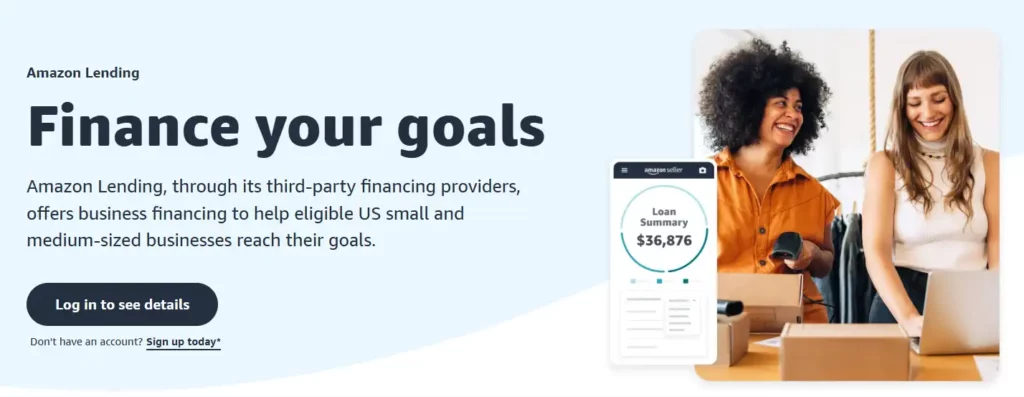
You cannot apply cold. Amazon invites sellers based on sales history and account health, which is one practical reason we keep client account health clean: it keeps options open. Offers arrive when Amazon decides, not when you need them, so never build a restock plan around one appearing.
Eligibility, in plain terms
| Product | Who it is for | Typical requirement |
|---|---|---|
| Pay by Invoice | Amazon Business buyers | Business account in good standing |
| Business line of credit | Registered businesses | Credit assessment, trading history |
| Amex Business Card | Businesses with credit | Standard card underwriting |
| Amazon Lending | Invited sellers only | Sales history, healthy metrics |
The pattern across all four is identical. Amazon rewards history. There is no shortcut for months of clean trading. I wish there were.
What Amazon business credit is good for
- Bridging the restock gap between paying a supplier and receiving Amazon’s disbursement.
- Taking a volume discount you could not otherwise fund.
- Seasonal build-up before Q4. This is the one use I rarely argue with, provided the stock is already proven.
Where it bites
- Fees and rates on merchant advances can be steep once annualised. Convert everything to an annual rate before comparing.
- Repayment from sales means a slow month still repays at the agreed pace, tightening cash precisely when it is scarce.
- Concentration risk. Financing your Amazon business through Amazon ties funding and revenue to one relationship.
I’ve seen sellers borrow to paper over a margin problem. It buys time at interest and solves nothing. If the unit economics are broken, financing makes the eventual reckoning larger.
How to decide what to borrow, and whether to borrow at all
We tested this order on client accounts before recommending it. Four questions, answered honestly, settle most financing decisions.
What is your true landed cost per unit? Not your estimate. Freight, duty, prep, Amazon fees, returns allowance, the lot. I’ve found sellers are wrong about this figure more often than any other in their business, usually by ten to fifteen percent. Borrowing against a wrong number magnifies the error.
Is the gap timing or profitability? A timing gap looks like this: the product sells, the margin works, but supplier payment lands six weeks before Amazon disburses. That is exactly what credit is for. A profitability gap looks like steady sales that never leave cash behind. Financing that is renting a problem.
What happens in your worst month? Not your average month. Model a slow February with a shipment delayed and one SKU suppressed. If repayment still clears, the debt is survivable. If it does not, you are betting the business on a good quarter.
What does it cost annualised? Merchant advances quote a flat fee that sounds modest until you convert it to an annual rate. Do that conversion for every option, on one line, before you compare anything.
Answer those four honestly and the choice makes itself. Usually in minutes. In our experience, roughly half the sellers who ask us about Amazon business credit do not need it. They need a price change or a slower restock.
Alternatives worth checking first
- Supplier terms. Ask for net 30 or net 60. Costs nothing. Most underused option in ecommerce, and I say that on every call.
- Inventory and revenue-based lenders built for ecommerce, who understand marketplace payout cycles.
- A business credit card with a long interest-free window, if you can clear it inside the period.
- Ordinary bank facilities, which are slower to arrange and usually cheaper than an advance.
We push supplier terms first because they cost nothing. Then we model the worst month rather than the average, because that number decides whether the debt is survivable.
Financing solves timing, not profitability. I’d repeat that twice on any first call. If margins are the real constraint, an account audit finds the leaks before you borrow against them, and better inventory planning often removes the need entirely.
FAQ
Who qualifies for an Amazon Business line of credit?
Registered businesses with an Amazon Business account in good standing, subject to a credit assessment by Amazon’s lending partner. New businesses and sole traders are often declined, so check your standing before applying.
Is Amazon Lending available to every seller?
No. Amazon invites sellers based on sales history and account health, and there is no cold application route. Keeping metrics clean is the only way to improve your odds of being offered something later.
Does Pay by Invoice affect my credit score?
It is trade credit on purchases rather than a consumer loan, so it typically does not appear on personal credit files. Late payment still restricts your buying privileges, which is its own problem.
What are better alternatives for inventory financing?
Supplier terms first, then ecommerce-specific inventory lenders, then a card with a long interest-free window. Compare everything on an annualised rate, because advances look cheap until you do that maths.
How much can Amazon lend a seller?
Offers vary widely with sales volume and account history, and Amazon does not publish a fixed schedule. Treat any figure you read online as anecdote rather than entitlement.
Last updated: August 24, 2026. Credit products, partners, and terms change; confirm current details in Seller Central or Amazon Business before applying.