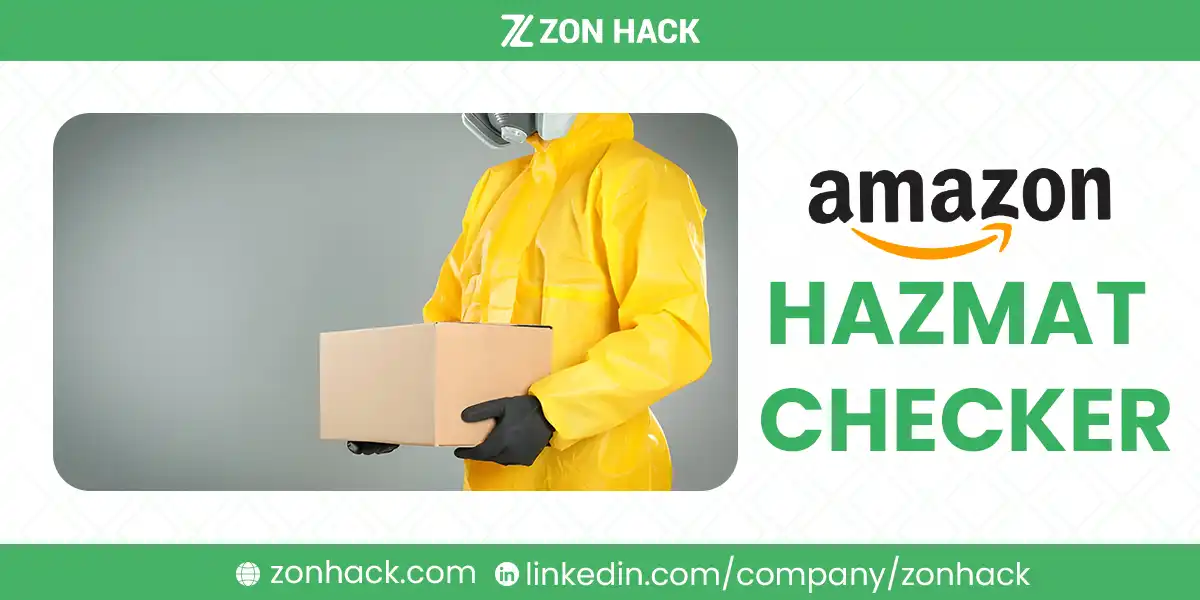
The Amazon hazmat checker is a tool inside Seller Central that tells you whether a product needs
dangerous goods review before it can be sent to FBA. It sits in the Manage Inventory area, and the
answer it gives is the one that matters, not the answer a supplier gives you.
Check before you ship, not after. That is the whole practical point of this page. Hazmat inventory
arriving without approval gets refused, held, or in some cases destroyed, and the cost falls on you.
I’ve found that sequence, ordering first and checking second, causes more losses in this area than any
misunderstanding of the rules.
What counts as hazmat on Amazon
Broader than most sellers expect. In our experience this is the part that surprises people, and it surprises them expensively.
Amazon’s definition covers anything classified as a dangerous good for transport, which pulls in a
great many ordinary consumer products:
- Lithium batteries, loose or inside a device. Anything with a rechargeable battery is in scope.
- Aerosols and pressurized containers. Deodorant, spray paint, compressed air.
- Flammable liquids and solids. Nail polish, hand sanitizer, some adhesives, perfume.
- Magnets, above certain strengths.
- Corrosives and oxidizers. Some cleaning products, pool chemicals, bleach.
- Paints, solvents, and thinners.
- Some cosmetics, where alcohol content or propellant makes them flammable.
- Matches, lighters, and fuel.
- Environmentally hazardous substances, including some pesticides and fertilizers.
The two that catch sellers out most are cosmetics and anything containing a battery. A perfectly
ordinary electric toothbrush, a phone case with a built-in power bank, a bottle of nail polish. None of
them feel dangerous. All of them are in scope.
How to check a product’s hazmat status
Three routes, in order of reliability.
1. The dangerous goods checker in Seller Central
This is the authoritative answer. Open Manage Inventory, find the dangerous goods identification
tool or dangerous goods review area, and enter the ASIN. Amazon tells you whether the product requires
review, is approved, or is prohibited.
Names and menu locations shift as Amazon reorganizes Seller Central, so search Help for “dangerous
goods” if the path has moved rather than assuming the tool has gone.
2. The listing itself
An existing listing frequently shows a hazmat or dangerous goods indicator in Manage Inventory, and inventory blocked pending review is usually flagged there. I’d treat that flag as reliable and the absence of one as inconclusive.
3. Ask your supplier for the documentation
Not a substitute for checking, and necessary anyway. What you need is a Safety Data Sheet, and for
battery products a UN 38.3 test report and often a battery transport document.
Suppliers routinely say a product “is not hazmat” because it ships freely in their country. That is not
the same question. The question is how the product is classified for transport in the marketplace you
are selling in, and only Amazon’s tool answers it for FBA.
What you need for hazmat review
Have these ready before you start, because a review stalls on missing paperwork more often than on a
genuine classification problem.
A Safety Data Sheet (SDS), current, in the right language, listing the correct product. An SDS for a
similar product from the same factory is not acceptable and is the most common rejection I see.
An exemption sheet, where the product is not actually regulated but resembles something that is.
Amazon provides a template for this, and it is the right route for products that look hazmat and are
not.
UN 38.3 test report for lithium batteries, plus a battery-specific transport document where
required.
Correct product details on the listing. Weight, dimensions, and battery information all feed the
classification. Wrong battery details are a genuine cause of wrong classification, and in our
experience they are frequently wrong because nobody checked what the factory entered.
How long it takes, and what to expect
Amazon states a review timeframe when you submit, and the practical answer is that it takes longer
than you want and clean submissions clear faster. I’d allow a comfortable buffer before any launch
date rather than treating it as a formality.
Three outcomes:
Approved. You can send inventory, subject to hazmat storage capacity, which is separate from and
tighter than standard capacity.
Rejected. Usually a documentation problem rather than a verdict on the product. Read the reason. Fix that specific thing. Resubmit. In my experience people resubmit the same file hoping for a different reviewer.
Prohibited. Some products cannot go through FBA at all. This is a real outcome and not a paperwork
problem, and the honest answer is to fulfill those yourself or not sell them.
If your product is hazmat
Four things change, and planning for them beats discovering them.
Storage capacity is separate and smaller. Hazmat inventory is limited independently of your normal
capacity, so a product approved for FBA can still be capped at a volume that does not support your
sales.
Fees are higher. Dangerous goods handling costs more, which matters most on low-margin products.
I’d rerun the margin arithmetic once you know the classification, because a product that worked at
standard fees sometimes does not at hazmat rates.
Some fulfillment options close. Certain hazmat classes cannot travel by air, which limits fast delivery and can exclude some destinations entirely. When I have seen this bite, it was a seller who had built a launch plan around Prime speed.
Self-fulfillment becomes a genuine alternative. If capacity or fees make FBA impractical, shipping
yourself with a carrier approved for your class is a legitimate route rather than a fallback. Our guide
to shipping options for Amazon sellers
covers the trade.
Batteries, in more detail
Worth a section of their own, because they account for most hazmat questions and the rules turn on
details sellers rarely think about.
Three configurations, treated differently. A battery shipped loose. A battery packed alongside a
device. A battery installed inside a device. Each has its own transport classification, and the third is
usually the least restricted, which is why some products ship more easily assembled than as a kit.
Chemistry matters. Lithium-ion and lithium-metal are handled differently, and the watt-hour rating
determines which thresholds apply. Your supplier should know the figure. If they cannot state it, that
is a warning about the documentation you are going to receive.
UN 38.3 is the test report you need, and it must relate to your actual cell, not a similar one. In
our experience a report for a comparable cell from the same factory is the single most common reason a
battery submission fails.
Two practical notes. Products with a battery installed frequently pass more easily, so if you have
any choice over how the product is packed, that choice is worth making deliberately. And a battery
change at the factory is a new classification, not a continuation of the old one. When a supplier
substitutes a cell for cost reasons and does not mention it, your approval no longer describes what is
in the box.
FBA hazmat versus shipping it yourself
If FBA proves impractical, the alternative is real and worth costing rather than dismissing.
Shipping dangerous goods yourself means using a carrier approved for your class, correct packaging and
labeling, and the right paperwork per consignment. It is more work per order and it removes the capacity
ceiling entirely.
The comparison worth running: hazmat FBA fees and capacity limits against your own per-order
handling cost and slower delivery promise. For a low-volume, high-margin product, self-fulfillment
frequently wins. For a fast-moving product where Prime delivery drives the sale, it usually does not.
I’d run that arithmetic before concluding a hazmat product cannot be sold. In our experience sellers
abandon viable products at this point because FBA said no and nobody priced the alternative.
What to do before you order inventory
The sequence that avoids the expensive version of this problem.
- Ask the supplier for the SDS before placing the order, not after. A supplier who cannot produce
one is telling you something. - Check the ASIN in Seller Central if the product already exists on Amazon.
- Submit for review before the goods ship, so approval and freight run in parallel rather than in
sequence. - Confirm hazmat storage capacity before committing to a large order quantity.
- Recalculate margin at hazmat fees rather than standard ones.
In our experience the sellers who lose money here are not the ones whose products turned out to be
hazmat. They are the ones who found out after the container arrived.
In our experience compliance documentation across regulated categories follows the same discipline, which our guide to
adding a compliance certificate to Amazon listings
covers, and a pre-shipment inspection is the control that
catches what paperwork does not.
FAQ
What is the Amazon hazmat checker?
A tool in Seller Central, in the Manage Inventory area, that tells you whether a product requires
dangerous goods review before it can be sent to FBA. It is the authoritative answer for FBA purposes,
regardless of what a supplier says.
What products are considered hazmat on Amazon?
Anything classified as a dangerous good for transport, which includes lithium batteries loose or in
devices, aerosols and pressurized containers, flammable liquids such as nail polish and sanitizer,
strong magnets, corrosives and oxidizers, paints and solvents, some cosmetics, and matches or lighters.
What documents does Amazon hazmat review need?
A current Safety Data Sheet naming the exact product, an exemption sheet where the item is not actually
regulated, a UN 38.3 test report for lithium batteries with any required battery transport document, and
correct weight, dimension, and battery details on the listing.
How long does Amazon hazmat approval take?
Amazon states a timeframe at submission, and clean submissions clear faster than incomplete ones. Allow
a comfortable buffer before any launch date, and submit before your goods ship so approval and freight
run in parallel.
Why was my Amazon hazmat review rejected?
Usually documentation rather than the product itself. The most common cause is a Safety Data Sheet for a
similar product rather than the exact one. Read the stated reason, fix that specific item, and resubmit.
Does hazmat classification change FBA fees and storage?
Yes. Dangerous goods handling costs more and hazmat storage capacity is limited separately from and more
tightly than standard capacity. Some classes also cannot travel by air, which restricts delivery speed
and destinations.
Last updated: August 31, 2026. Amazon’s dangerous goods classifications, required documentation, review
timeframes, hazmat storage capacity, and fee rates all change, and Seller Central menu locations move.
Seller Central and Amazon’s dangerous goods help pages carry the current position for your marketplace.