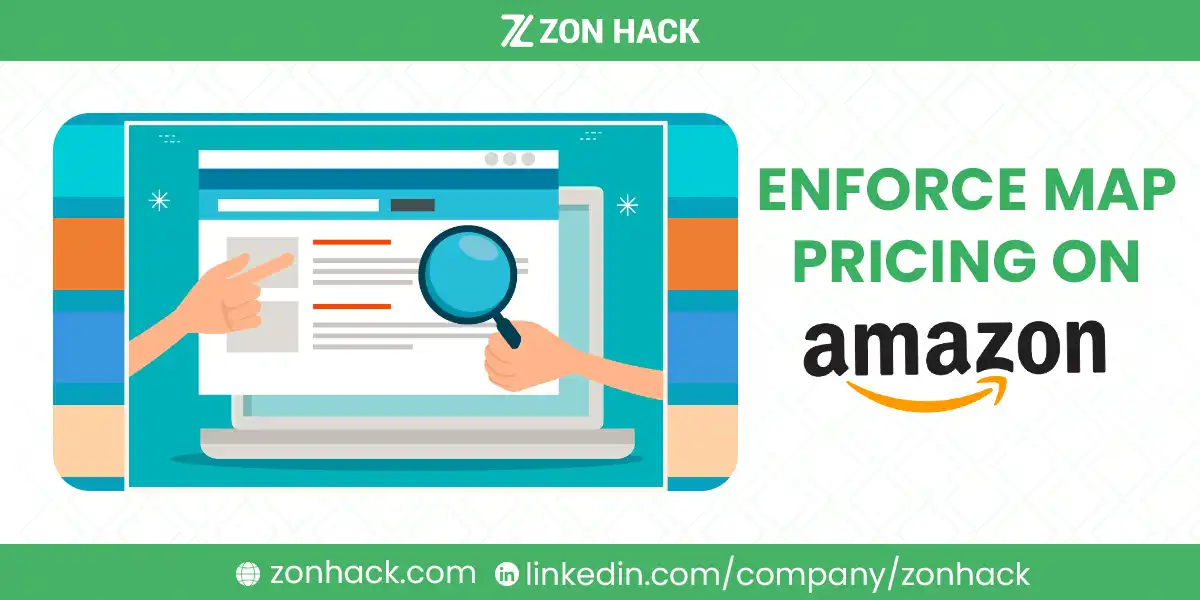
To enforce MAP pricing on Amazon you have to accept an uncomfortable fact first: Amazon will not
enforce it for you. MAP is an agreement between a brand and its resellers. Amazon is not party to it,
sets its own prices, and will not police a contract it never signed.
That means every workable approach happens upstream of Amazon, in your distribution. The sellers
undercutting you got the product from somebody, and the only durable fix is finding out who and changing
the terms. Everything else is triage.
This page separates what genuinely works from what sellers spend months on without result. A note on
scope: MAP enforcement touches competition law, and the rules differ by country and change. Nothing
here is legal advice, and the structural steps below are worth reviewing with a lawyer before you act on
them.
Why the obvious routes fail
Worth knowing before you spend time on them.
Reporting a MAP violation to Amazon does nothing. There is no MAP complaint mechanism, because MAP is not an Amazon policy and never has been, which means the reporting routes that exist for counterfeits and safety issues and policy breaches simply have no category that fits what you are trying to report. Pricing complaints are actionable only where the price itself breaks an Amazon rule, such as gouging.
Amazon’s own pricing is not a MAP violation in any sense you can act on. Amazon buys and resells at whatever price it decides, and it will not discuss the matter, and there is no escalation path that changes it. I’d accept that early.
Sending a cease and desist to an anonymous seller usually reaches nobody. Many undercutting accounts
are opaque by design, and in our experience the letter arrives at a forwarding address and changes
nothing.
Repricing down to match is the instinct and it is the trap. You have now set the new floor, your
resellers follow, and the margin never comes back. I’d resist it for as long as the cash allows.
Why the leak exists at all
Understanding the mechanics helps, because “unauthorized seller” makes it sound like theft when it is
usually just commerce working as designed.
Distributors sell stock. That is their function. A distributor holding inventory they cannot move
through their intended channel will find another channel, and Amazon is the most liquid one available. No
malice required.
Volume incentives create the pressure. If your terms reward a distributor for taking 10,000 units when
their real demand is 6,000, you have manufactured 4,000 units of diverted stock and then complained about
where they went. I’d look at your own incentive structure before looking at their ethics.
Retail returns and closeouts leak too. A retailer clearing end-of-line stock through a liquidator puts
your product on Amazon at a price nobody authorized, and the liquidator did nothing wrong.
Cross-border arbitrage is a version of the same thing. Price your product differently in two markets
and somebody will move units between them. That is a pricing-strategy consequence rather than an
enforcement failure.
The practical implication is uncomfortable and useful: most MAP problems are self-inflicted at the
terms stage rather than inflicted by bad actors downstream, and the fix is upstream where the terms are
written.
What actually works
Five levers, in descending order of effectiveness.
1. Control distribution
The only real fix, and the only one that lasts. If unauthorized sellers have your product, your
distribution is leaking. Options:
- Sell direct only. Removes the problem entirely. Takes on the work yourself.
- A written authorized reseller agreement with MAP terms, territory, and channel restrictions.
- Order-quantity limits on distributors, since diverted stock usually arrives in bulk.
- Terminating the leak once you identify it, which is the part that requires nerve.
Test-buy to find the source. Order from the undercutting seller, then trace the unit: batch codes,
lot numbers, and packaging variations frequently identify which distributor it came from. In my
experience this works more often than sellers expect, and it is the single most useful hour in the whole
exercise.
2. Brand Registry and the IP levers
Brand Registry does not enforce MAP, and it gives you the tools that adjacent problems respond to.
Counterfeit and materially different goods are actionable, and a surprising share of deep discounters
are selling something that is not quite your product: gray imports, expired stock, damaged or repackaged
units, or missing components. Those are genuine violations with real enforcement behind them. Our guide to
reporting a counterfeit item on Amazon
covers the process.
Test-buying serves double duty here, because it tells you both where the stock came from and whether
it is compliant.
3. Own the Buy Box on merit
If you hold the Buy Box, undercutting sellers get very little traffic regardless of their price. In our experience that is worth more than any letter.
That means competitive price, FBA or comparable delivery, and strong account health rather than a legal
letter. This is the pragmatic answer while the distribution work happens, and it is the one most
brands under-invest in because it feels like conceding.
4. Make the listing yours
A well-built brand listing with strong content, A+ Content, and brand-registry protections is harder for somebody else to sit on profitably, because the work of matching your page is real work and most opportunistic resellers are not in the business of doing it. I’d invest here before investing in enforcement. Our guide to
A+ Content sizes covers the production side.
Bundles are the strongest version of this. A bundle you created has its own ASIN, and nobody else has
the identical set to undercut you on. Our guide to
creating a bundle listing covers doing it
compliantly, and I’d treat it as a MAP tactic as much as a merchandising one.
5. Monitoring, so you know rather than guess
Track who is on your listings and at what price. Manually for a small catalog. With a tool if the catalog justifies it. The point is a record over time, because a pattern identifies a source and a snapshot
does not.
The legal position, carefully
Genuinely important, and the reason this page hedges where it does.
Minimum advertised price policies are treated differently across jurisdictions, and the distinction
between a policy you announce unilaterally and an agreement you negotiate matters a great deal in
competition law. Resale price maintenance is restricted or prohibited in many places.
Get advice before you write the policy, not after you try to enforce it. When I have seen this go wrong, the sequence was reversed. In our experience brands
draft MAP terms from a template found online and then discover the terms are unenforceable in their main
market, which is worse than having none.
What I would not do is treat this page, or any page, as sufficient. The distribution steps above are
commercially sound; the contractual ones need a lawyer in your jurisdiction.
A realistic sequence
What I would do, in order, over about a quarter.
- Monitor and record for 2 to 4 weeks. Who. What price. How much stock.
- Test-buy from the worst offenders. Trace batch codes. Check compliance.
- Act on any genuine IP or condition violations immediately, since those have real teeth.
- Identify the distribution leak from the trace and decide what you are willing to do about it.
- Get the reseller agreement reviewed by a lawyer in your market before issuing it.
- Strengthen the listing and the Buy Box position in parallel, because steps 1 to 5 take months.
Step 4 is where most brands stop, because the leak is frequently a distributor they do not want to
lose. That is a genuine commercial decision rather than an enforcement problem, and I’d rather name it
than pretend a letter will solve it.
If you would rather have monitoring, listing control, and enforcement handled alongside the rest of the
account, that sits inside our
account management service. We are an
Amazon Ads partner and an Amazon SPN Verified Partner.
FAQ
Will Amazon enforce MAP pricing for me?
No. MAP is an agreement between a brand and its resellers, and Amazon is not party to it. There is no MAP
complaint mechanism, and Amazon sets its own prices independently.
How do I find out who is supplying unauthorized sellers?
Test-buy from them and trace the unit. Batch codes, lot numbers, and packaging variations frequently
identify which distributor the stock came from, and that trace is usually the most productive hour in the
whole process.
Can I report a MAP violation to Amazon?
Not as such. Pricing reports are only actionable where the price itself breaks an Amazon rule. However,
many deep discounters are selling gray imports, expired stock, or repackaged units, and those are genuine
violations with real enforcement behind them.
Should I lower my price to match an undercutting seller?
Rarely. Matching sets a new floor that your resellers then follow, and the margin does not come back.
Holding price while you work on distribution and Buy Box position is usually the better trade if cash
allows.
Does Brand Registry stop MAP violations?
No, but it gives you the tools for adjacent problems. Counterfeit goods, materially different items, and
condition violations are actionable through Brand Registry, and a meaningful share of deep discounters
fall into one of those categories.
Is MAP pricing legal?
It is treated differently across jurisdictions, and resale price maintenance is restricted or prohibited
in many places. The distinction between a unilaterally announced policy and a negotiated agreement
matters legally, so get advice in your market before drafting terms.
Last updated: August 31, 2026. This page is general commercial information rather than legal advice.
MAP and resale price maintenance rules differ by jurisdiction and change, and any pricing policy should be
reviewed by a qualified lawyer in your market before you issue or enforce it.