
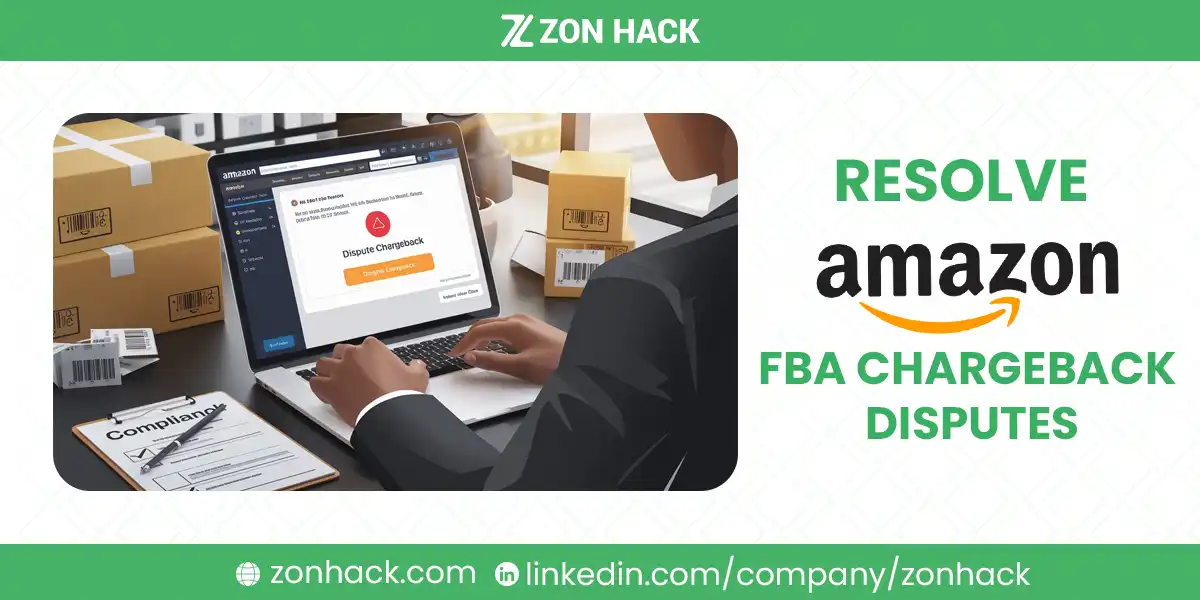
A chargeback is a buyer’s bank or card issuer reversing a payment, which is a different thing from an Amazon refund or an A-to-z claim. The money comes back out through the payment network rather than through Amazon’s own process, and that changes who handles it.
I’d start with the rule that decides almost everything: on FBA orders Amazon generally absorbs service-related chargebacks, because Amazon performed the service. On seller-fulfilled orders you are responsible, because you did. Knowing which side of that line an order sits on tells you whether to act at all.
The two kinds, and why the distinction matters
Chargebacks divide into two types, and I’ve found they behave completely differently.
Service chargebacks are about the transaction going wrong. The item never arrived. It arrived damaged. It was not as described. The buyer says they returned it and were not refunded. On FBA orders, these are Amazon’s operational responsibility and Amazon typically handles them.
Fraud chargebacks are the cardholder saying they never authorized the purchase at all. Stolen card, family member using it, or genuine fraud. Amazon generally handles these as the payment processor of record.
The practical consequence is that FBA sellers should not see many chargebacks landing on them, and when one does it is worth understanding why rather than paying it reflexively. On seller-fulfilled orders the picture reverses and the evidence you kept at dispatch decides the outcome.
What to do when one appears
Check the order’s fulfillment method first. Everything I’d do next depends on it.
If it is FBA and service-related, Amazon is usually handling it. Check your account for any notification asking for input. If none arrives, there is generally nothing to do, and I’d not open a case to chase it.
If it is seller-fulfilled, respond within the deadline, which is short. Amazon will notify you and ask whether you want to challenge it. Silence is treated as acceptance.
If it is fraud on either fulfillment method, Amazon normally handles it as processor. Your exposure is limited unless something about the order was unusual, such as an address change after purchase or a delivery that went somewhere other than the billing address.
One thing I’d add across all three cases. Record the outcome, whatever it is. A single chargeback tells you nothing. A pattern of them, grouped by fulfillment method and by claim type, tells you exactly where your process leaks, and that pattern only exists if somebody wrote the individual cases down.
What actually wins a seller-fulfilled dispute
Documents, not explanations. In our experience that is the whole of it. This is the same discipline that decides SAFE-T claims, and sellers lose both for the same reason.
- Carrier tracking showing delivery, ideally with signature on higher-value orders.
- Proof the delivery address matched the address on the order exactly.
- Photographs of the item at packing, for anything valuable.
- The dispatch date against the promised date, showing you shipped on time.
- Any buyer messages that contradict the claim.
The single strongest piece of evidence is delivery confirmation to the order address. Without it a non-delivery chargeback is close to unwinnable, and I’d treat that as the reason to buy tracked shipping on anything above a modest value rather than as bad luck when it happens.
Keep the response factual and short. Order ID, dates, tracking number, delivery confirmation, and a couple of sentences. In our experience long narratives do not help, and the reviewer is checking whether the documents exist rather than reading an argument.
Building the evidence before you need it
Everything above assumes you have documents. Most sellers do not, and they discover that on the day a dispute arrives, which is far too late.
The system worth having is small. Three habits, none of which take more than seconds per order.
Photograph anything valuable at packing, with the shipping label visible in the frame so the image ties to an order without any filing effort. I’d set a value threshold and apply it mechanically rather than deciding case by case, because deciding case by case means it never happens on the order that eventually matters.
Buy tracked shipping as the default, not as an upgrade for expensive items. The difference in postage is trivial against a single lost dispute, and delivery confirmation to the order address is the strongest evidence available in any of these processes.
Keep buyer messages. Amazon retains them, but exporting the thread on anything that felt difficult at the time takes a moment and gives you the contradiction ready-made if a claim later says something different.
The reason I’d build this before you need it rather than after is that the evidence is perishable. A photograph not taken at packing cannot be taken later. A tracking number not bought does not appear retroactively. In our experience the sellers who win these disputes are not better at arguing, they simply have the documents, and they have them because they set up a habit rather than a response.
There is a second benefit that is easy to overlook. The same records serve chargebacks, A-to-z defenses and SAFE-T claims. One habit covers all three processes, which changes the effort calculation considerably.
Which route applies: chargeback, A-to-z, or SAFE-T
These three get confused constantly, and using the wrong one wastes the window on the right one.
| Route | Who initiates | When it applies |
|---|---|---|
| A-to-z Guarantee | The buyer, through Amazon | Buyer unhappy, wants Amazon to intervene |
| Chargeback | The buyer, through their bank | Buyer bypasses Amazon entirely |
| SAFE-T claim | You, after a refund | Seller-fulfilled order where you want reimbursing |
The ordering matters. Defend the A-to-z claim at the time, because keeping the money is far easier than recovering it, and an unanswered A-to-z claim is decided against you by default. If a refund has already gone through on a seller-fulfilled order and you believe it was wrong, SAFE-T claims is the route to recovery.
A chargeback is the buyer going around Amazon to their bank. It often follows a failed A-to-z claim, which is worth knowing, because a buyer who lost an A-to-z and then filed a chargeback is telling you something about how determined they are.
There is a fourth route people sometimes expect and it does not exist. You cannot appeal a chargeback to Amazon as though it were an internal decision. The card network decides it, Amazon passes your evidence along, and the outcome arrives from the issuing bank. That is why the documents matter so much more here than the argument does.
Reducing how often this happens
Most chargebacks are preventable, and I’d say the prevention is unglamorous enough that people skip it.
Ship with tracking, always. The cost difference is trivial against a single lost dispute.
Use a recognizable descriptor. A surprising share of fraud chargebacks are buyers not recognizing a charge on their statement. If your billing descriptor is an unfamiliar company name, some of those become disputes.
Answer buyer messages quickly. A buyer who cannot reach you goes to their bank. In my experience response speed prevents more chargebacks than any documentation improves the outcome of.
Set delivery expectations accurately. Most “item never arrived” claims are “item arrived later than I expected,” and an honest delivery date prevents them.
Watch for repeat claimants. The same buyer appearing more than once is a pattern worth recording, even on small orders where disputing is not worth the time.
The metric consequence, which outlasts the money
Worth knowing, because I’ve found it changes how seriously people take this.
Chargebacks feed into Order Defect Rate, and Order Defect Rate must stay under 1%. That threshold is what actually restricts accounts, so a cluster of chargebacks can cost you far more than the disputed amounts.
This is the strongest argument for prevention over dispute. Winning a chargeback recovers the money; it does not always undo the metric effect, and for a low-volume seller a handful of disputes can move Order Defect Rate meaningfully. Our guide to FBM shipping requirements covers the five metrics and where each threshold sits.
If a restriction has already landed, Amazon seller account reinstatement covers the appeal.
FAQ
Who is responsible for chargebacks on Amazon FBA orders?
Amazon generally absorbs service-related chargebacks on FBA orders, since Amazon performed the fulfillment. On seller-fulfilled orders the seller is responsible. Fraud chargebacks, where the cardholder says they never authorized the purchase, are typically handled by Amazon as the payment processor.
What is the difference between a chargeback and an A-to-z claim?
An A-to-z claim is the buyer asking Amazon to intervene. A chargeback is the buyer going to their bank instead, bypassing Amazon entirely, and reversing the payment through the card network. Chargebacks often follow a failed A-to-z claim.
How do I win an Amazon chargeback dispute?
With documents rather than explanations. Carrier tracking showing delivery to the exact order address is the strongest evidence, ideally with a signature on higher-value orders. Add the dispatch date against the promise, packing photographs, and any buyer messages that contradict the claim.
Do chargebacks affect my Amazon account health?
Yes. They feed into Order Defect Rate, which must stay below 1%, and that threshold is what restricts accounts. A cluster of chargebacks can cost more through the metric than through the disputed amounts themselves.
Should I file a SAFE-T claim or dispute a chargeback?
They are different situations. A chargeback is the buyer’s bank reversing payment, and you respond to it within Amazon’s deadline. A SAFE-T claim is you asking Amazon to reimburse a refund it granted on a seller-fulfilled order, which is a separate process with its own window.
How can I prevent Amazon chargebacks?
Ship everything with tracking, use a billing descriptor buyers will recognize, reply to buyer messages quickly, and set honest delivery expectations, since most non-delivery claims are really late-delivery complaints. Record repeat claimants even on orders too small to dispute.
Last updated: September 12, 2026. Amazon’s chargeback handling, liability rules and response deadlines change and vary by marketplace, so confirm current terms in Seller Central and against Amazon’s seller documentation. Nothing here is legal advice. ZonHack is an Amazon Ads verified partner and an Amazon SPN Verified Partner.