
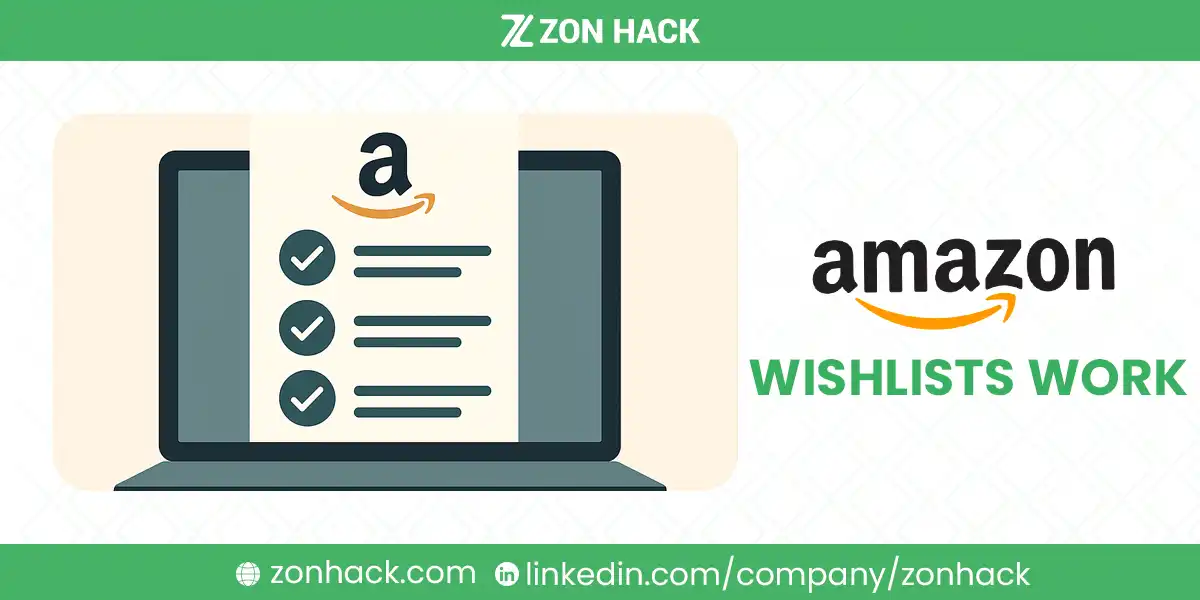
An Amazon wishlist is a saved list of products tied to your account. You add items from any product page, keep the list private or share it by link, and Amazon marks items as purchased when someone buys from it, which quietly solves the duplicate-gift problem that ruins birthdays.
That is the one-paragraph version. The details underneath, privacy tiers, price-drop behavior, address sharing without exposing your street, are where the feature gets genuinely useful, and where most shoppers never look. I’ll also cover the seller side, because saves are a demand signal merchants can actually read, and I find it strange how rarely anyone discusses that half.
How Amazon wishlists work
Every account can hold several lists. Each saved entry keeps a live connection to the product page, so you always see current price and availability. The mechanics worth knowing:
- Privacy has three levels. Private (only you), Shared (anyone with the link can view), and Public (attached to your profile and searchable). New lists default to private.
- Purchases sync. When someone buys from your shared list, the item is marked as purchased for everyone else viewing it, without notifying you which item, if you keep the surprise setting on.
- Prices update, with a catch. You see today’s cost, and reductions since you saved something get flagged. Nothing is frozen. A wishlist is a bookmark, not a reservation, and I’ve seen that surprise people.
- Gift addresses stay hidden. You can attach a shipping address so gift-givers send items directly to you without ever seeing your street address. Amazon routes it behind the scenes.
- Alexa adds by voice. “Alexa, add coffee grinder to my wishlist” works, and honestly it is my favorite capture method for things remembered mid-chore.
Setting one up: the four steps
1. Create the list
Sign in, hover over Account and Lists in the top-right corner, and choose Create a List. Name it, pick the privacy tier, done. My advice: separate lists for separate purposes, because one giant catch-all becomes unusable around entry forty. I speak from experience.
2. Add items
Every product page has an Add to List button next to the buy box. On the mobile app you can also scan a physical product’s barcode in a store and capture it instantly, which turns showrooming into a habit.
3. Manage it
Under Account and Lists, then Your Lists, you can reorder items, add notes and priorities (“need this in blue”), set quantities, remove things, and toggle whether purchased items stay visible. The notes field is underrated for gifting: sizes and color preferences spare the giver a guess. Use it.
4. Share it
Click Share List, copy the link, and send it anywhere. For registries (weddings, babies) Amazon has dedicated list types with extra features like completion discounts, but an ordinary wishlist covers most gift occasions. If you want to share actual cart contents instead of a list, that works differently; we covered it in our guide to sharing an Amazon cart.
What buyers get out of it
Organized purchase planning. A wishlist is a holding pen between “want” and “buy.” Things sit there while you think, and in my experience the two-week-old save you still want is a far better purchase than the same-day impulse grab.
Price-drop visibility. Reductions get flagged automatically, which turns the feature into a lightweight deal tracker for anything you were patient enough to save. Before Prime Day or the holiday events, a stocked wishlist is your personal shortlist.
Painless gifting, both directions. Sharing your list means people buy you things you actually want. Receiving a list means you buy the right size the first time. The purchased-item sync prevents doubles without spoiling the surprise.
Stock notifications. Save something unavailable and you can be alerted when it returns, which beats checking the page weekly. Quietly one of the best features here, I think.
What wishlists mean for sellers
Here is the section written for our usual readers. Saves are a real demand signal, and they behave differently from cart adds.
They mark deferred intent. A cart add says “buying now.” A save says “buying later, if conditions change.” Price is usually the condition. Products with heavy save activity respond disproportionately well to coupons and deal events, because the audience is pre-built and waiting. We plan client promotions around exactly this.
They concentrate around gifting spikes. Save-heavy products convert in bursts before holidays, when shared lists get worked through. Giftable catalog? Plan inventory and deal calendars around that burst pattern rather than smooth demand.
They reward availability. A restock pings the shoppers who saved the product. Going out of stock on a heavily saved ASIN wastes an audience Amazon assembled for you free, which I’d call the most avoidable mistake in this whole topic.
What you cannot do: Amazon does not show sellers who wishlisted their products or send them messages. The signal reaches you indirectly, through the sales patterns above, not as a marketing list. Any tool promising direct wishlist targeting is overselling.
For sellers deciding what to stock in the first place, wishlist behavior is one more demand clue alongside the research tooling we covered in our free product research tools guide.
Wishlist vs cart vs registry: which to use
| Feature | Wishlist | Shopping cart | Registry |
|---|---|---|---|
| Purpose | Save for later, gifts | Buying now | Event gifting |
| Price | Current price shown, drops flagged | Current price at checkout | Current price |
| Sharing | Link, three privacy levels | Not designed for it | Public event page |
| Duplicate protection | Yes, on shared lists | No | Yes |
| Extras | Notes, priorities, alerts | 90-minute-ish price stability | Completion discounts |
The cart holds this week’s purchase. The wishlist holds this year’s maybes. The registry holds one event. Treating the cart as long-term storage is the common mistake: saved-for-later entries clutter checkout and lack every sharing feature.
FAQ
How does an Amazon wishlist work?
You save products to a named list from any product page, control who can see it (private, shared by link, or public), and share it for gifting. Items show current prices, flag drops, and get marked as purchased when someone buys them from your list.
Can people see my address through my Amazon wishlist?
No. You can attach a shipping address to a list so gift-givers send items directly to you, but Amazon hides the actual address from them. Buyers only see your name and city at most.
Does Amazon notify me when a wishlist item drops in price?
The list itself flags price drops since you added each item, and Amazon surfaces deals on saved items in the app. For reliability, check the list before sale events rather than depending on notifications alone.
Can someone buy me something from my wishlist without me knowing?
Yes, if your list is shared or public. Amazon marks the item as purchased for other viewers to prevent duplicates, and by default it does not spoil the surprise for the list owner until the gift arrives.
Do wishlist adds help a product’s ranking on Amazon?
Not directly in any way Amazon has confirmed. Their real value to sellers is behavioral: wishlisted products respond strongly to price drops and deal events, and restocks notify the shoppers who saved the item, recovering demand that would otherwise be lost.
How do I find someone’s Amazon wishlist?
Ask them for the share link, which is the reliable route. Public lists can also be found through Amazon’s list search by the person’s name or email, but only if the owner set the list to public.
Last updated: August 26, 2026. Wishlist features and notification behavior change as Amazon updates the shopping experience; the current options live under Account and Lists.