
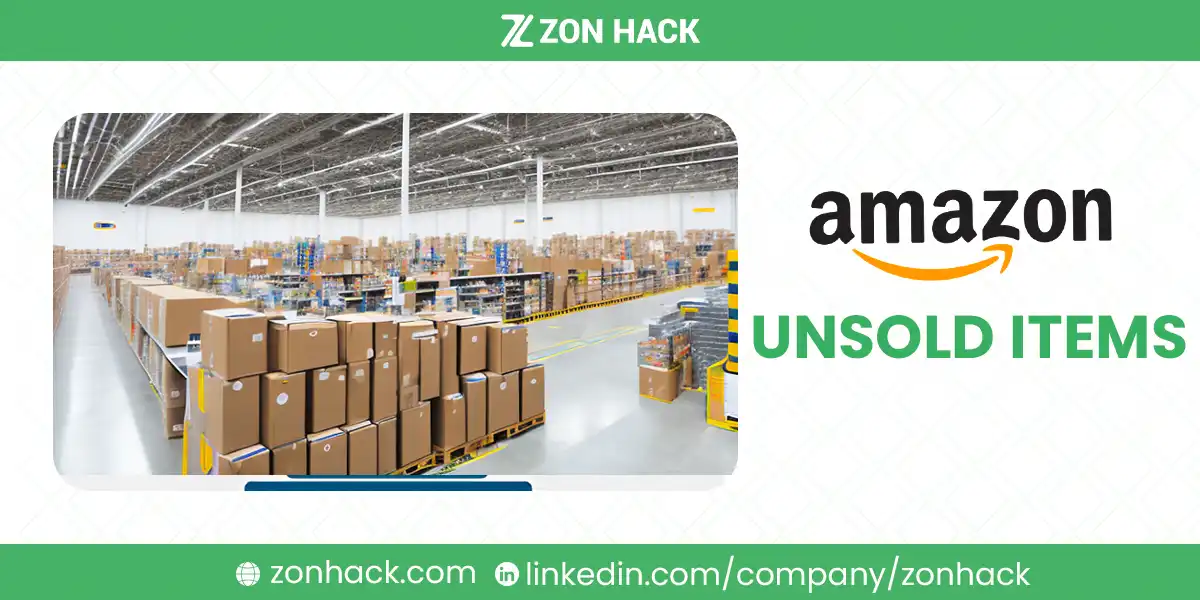
Amazon unsold items are returned, overstocked, and excess goods that Amazon moves on rather than storing, and they reach the public through four legitimate routes. Only 2 of the 4 are open to ordinary shoppers. The other two require a business account and a registration process.
Amazon Warehouse sells open-box and used goods that Amazon has graded. Amazon Outlet sells
overstock that is still new. Amazon Liquidation Auctions sells pallets and truckloads to registered
businesses. And third-party liquidation marketplaces buy Amazon’s returns in bulk and resell them
on, at higher unit prices and lower risk than buying direct.
There is no secret route, no employee discount channel, and no way to buy a pallet of untouched
electronics for pennies. That last belief is what the scams in this space are built on, and the last
section covers how they work.
How to get Amazon unsold items: the four routes
1. Amazon Warehouse
Open to anyone, no registration, and the easiest place to start.
Amazon Warehouse sells returned and open-box items that Amazon has inspected and assigned one of four condition grades, running from Like New down through Very Good and Good to Acceptable, with the listings appearing alongside ordinary search results rather than in some separate section you have to hunt for. No registration. No minimum. Nothing to apply for.
The grade is the whole thing. Like New usually means the box was opened and little else. Acceptable
means visible wear you should expect to see. Amazon states the grade and frequently adds a note on what
is specifically wrong with that unit, and I’d read that note rather than the grade alone.
Returns work the same way as any Amazon purchase, which makes this the lowest-risk route by a wide
margin. Our guide to Amazon Warehouse deals
covers finding them efficiently.
2. Amazon Outlet
Also open to anyone. Outlet sells overstock and clearance that is still new, rather than returns.
Fewer bargains than Warehouse on high-value goods, no condition uncertainty at all.
Worth checking when you want the discount without the used-item question. I’d start here on anything I intended to give as a gift.
3. Amazon Liquidation Auctions
This is the one people mean when they ask about pallets, and it is not a consumer channel.
Amazon runs liquidation auctions selling returned and excess inventory in bulk, by pallet or truckload,
to businesses. You need a business account and to complete a registration process, and depending on
your location that may include a resale certificate or equivalent tax documentation.
What you are buying is a manifest, not a curated selection. The manifest lists what should be in the
lot, not the condition of each unit, and lots routinely contain items that are damaged, incomplete,
or unsellable. That is priced in, and it is the reason the unit cost is low.
I’d not enter this route without answering three questions first: where will you store a pallet, who
will test and grade the contents, and what will you do with the third of it that cannot be sold.
4. Third-party liquidation marketplaces
Companies that buy Amazon returns in volume and resell them on, sometimes sorted by category or
condition, sometimes as-is.
Higher unit prices than buying direct, meaningfully lower risk. For anyone starting out this is
usually the better trade, because somebody has already absorbed the worst of the lot.
Check who you are dealing with. The sector contains established liquidators alongside operations whose entire model is reselling the same tired pallets repeatedly, and I’ve found the difference is visible in whether they will tell you where the lot came from.
What condition to actually expect
Setting expectations properly, because this is where disappointment concentrates.
Returned goods are returned for reasons. Some reasons are trivial. Wrong size. Changed mind. Duplicate gift. Others are not trivial at all, and a lot that has been assembled from whatever came back through a returns center in a given week will contain faulty units, incomplete units, and units damaged somewhere in transit, mixed in with the perfectly good ones and indistinguishable from them until somebody opens every box. A bulk lot contains both, and
nobody has separated them for you.
Grading is done fast. A person handling a large number of items assigns a grade in seconds.
Merchandise that arrived at the returns center in good packaging tends to be graded more generously
than merchandise that arrived battered, and the grade you see reflects that judgment rather than a
laboratory test.
Retail packaging is frequently gone. Expect generic boxes on open-box items, and in our experience that alone accounts for a good share of buyer disappointment.
Accessories go missing. Cables, chargers, manuals, and mounting hardware are the most commonly
absent parts, and their absence is not always noted.
In our experience the people who do well buying liquidation inventory are the ones who assumed a
meaningful share of every lot was worthless and priced accordingly. The ones who struggle assumed the
manifest described working goods.
The scams, and how they are structured
Three patterns, and they are consistent enough to recognize.
The “wholesale list” for sale. Somebody sells you access to a list of liquidation suppliers. The
suppliers are all findable for free, and several no longer trade. The product being sold is the list,
not the inventory.
The unmanifested pallet at an impossible price. No manifest, a photograph of a wrapped pallet, and
a price that implies working electronics at a few dollars a unit. What arrives is genuinely unsold
Amazon inventory, in the sense that nobody could sell it.
The fake Amazon liquidation site. Sites using Amazon’s branding and claiming to be an official
outlet. Amazon’s own liquidation channels are reached through Amazon’s own domains and require
business registration. A site asking for payment by bank transfer or cryptocurrency is not one of
them.
I’d apply one test to all three. Amazon does not need intermediaries to sell its excess inventory,
and any route that positions itself as privileged access to Amazon stock is almost certainly selling
you the access rather than the stock.
What it costs to do this properly
Numbers, because the gap between the pallet price and the real cost is where people lose money.
Budget for all of it before bidding on anything:
- The lot price, which is the only figure most people consider.
- Freight, which on a pallet is rarely trivial and on a truckload is a serious line item.
- Storage, whether that is a garage for 3 months or rented space.
- Testing time, at whatever your hour is worth. A pallet of mixed electronics can absorb 8 to 12
hours before you know what you have. - Disposal of the unsellable share, which costs money rather than merely earning nothing.
- Listing and selling fees on whatever channel you resell through, typically 10% to 15% of the
sale price.
Assume a meaningful share of any returns lot is unsellable and price your bid against the portion
you can actually move. In our experience that single discipline separates the people who do this
profitably from the people who do it once.
I’d also test the route small before committing. One pallet teaches you more than any amount of
reading, including this page, and the tuition is affordable at that scale.
If you are the seller with unsold inventory
The other half of this question, and the more expensive one. Unsold inventory costs you money every month it sits, and I’d argue it costs more attention than it deserves precisely because nobody sees the charge until a fee report arrives.
Long-term storage and aged-inventory surcharges are the trigger. Amazon charges more to store stock
that has been sitting, and those charges compound quietly until somebody looks at a fee report. Our
guide to calculating FBA profit margin and costs
covers where they surface.
You have four options, and the right one depends on whether the product has a future:
Discount and advertise through it. Best when the product sells and the problem is pace. Cheapest
option if it works.
Create a removal order and have the units returned to you. Sensible when you have another sales
channel or the goods are worth handling.
Use FBA Liquidations, where Amazon sells the inventory through its liquidation partners and returns
a share of the value to you. Less than you paid, more than a disposal, and no handling on your part.
Dispose of it. Sometimes correct, and in our experience the option sellers delay longest, because it feels like admitting a loss that has in fact already happened.
Grade and Resell is worth knowing about separately. It allows eligible returned units to be graded
and resold as used rather than being written off, which recovers value on returns you would otherwise
lose entirely. In our experience it is the least-used setting with the clearest payback.
The upstream fix is the boring one. Unsold inventory is usually a forecasting or listing problem
rather than a liquidation problem. If you are liquidating repeatedly, the decision that needs
attention happened at the purchase order, and our
account management service exists
partly because that pattern is easier to see from outside.
FAQ
How do I get Amazon unsold items?
Through four legitimate routes: Amazon Warehouse and Amazon Outlet, both open to anyone, and Amazon
Liquidation Auctions plus third-party liquidation marketplaces, which require a business account and
registration. There is no consumer route to bulk pallets.
Can anyone buy Amazon liquidation pallets?
No. Amazon’s liquidation auctions require a business account and a registration process, which
depending on your location may include a resale certificate or equivalent tax documentation. Consumers
buy through Amazon Warehouse and Amazon Outlet instead.
What is the difference between Amazon Warehouse and Amazon Outlet?
Amazon Warehouse sells returned and open-box items that Amazon has graded by condition. Amazon Outlet
sells overstock and clearance that is still new. Warehouse offers deeper discounts with condition
uncertainty; Outlet offers smaller discounts with none.
Are Amazon liquidation pallets worth buying?
Only if you can store, test, and grade the contents and can absorb the share that is unsellable. The
manifest lists what should be in a lot, not the condition of each unit, and lots routinely contain
damaged or incomplete items. That risk is why the unit cost is low.
How do I spot an Amazon liquidation scam?
Watch for wholesale supplier lists being sold as products, unmanifested pallets at impossible prices,
and sites using Amazon branding while asking for bank transfer or cryptocurrency. Amazon does not need
intermediaries to sell its own excess inventory.
What should a seller do with unsold FBA inventory?
Four options: discount and advertise through it, create a removal order, use FBA Liquidations to
recover part of the value through Amazon’s partners, or dispose of it. Grade and Resell is also worth
enabling, since it recovers value on returned units that would otherwise be written off.
Last updated: August 30, 2026. Amazon Warehouse grading, Outlet availability, liquidation auction
registration requirements, and FBA removal, liquidation, and Grade and Resell options change over
time. Amazon’s own pages and Seller Central carry the current position.