
Free Amazon product research tools split into two camps: tools that stay free forever, and free trials of paid platforms. The permanently free ones handle demand checks, price history, and rough sales estimates. That is enough to validate an idea. What you lose is deep historical data and bulk filtering, which is exactly what the paid tiers sell.
We use every option below on live product hunts, and I still start with Amazon’s own search bar before opening any of them.
What to look for in free Amazon product research tools
Five capabilities matter. Everything else is packaging.
- Sales estimates. Roughly how many units does a listing move each month?
- Keyword demand. What are shoppers actually typing, and how contested is it?
- Price history. Has the category been racing to the bottom for two years?
- Fee and margin math. Does it subtract Amazon’s cut, or leave you to discover it later?
- Niche signals. Can it point at underserved corners rather than the obvious ones?
Free tiers usually cap searches per day or hide the deeper analytics. Trials hand you the full platform for a week or two instead. Both are useful. The trap is starting a trial you have no time to use.
If you would rather buy the research than the software, our product research service delivers vetted opportunities with demand, competition, and margin data already attached.
Amazon product research tools compared
The question behind most searches here is not “which tools exist” but “which one should I open first”. I’d answer it with this table, and the sections below explain each row.
| Tool | Free tier | What it is actually good at | Where it stops |
|---|---|---|---|
| Helium 10 | Yes, limited daily uses | Keyword volume, the widest free feature set | Daily caps bite quickly once you screen at volume |
| AMZBase | Yes, free Chrome extension | Fast ASIN and description lookup while browsing | No sales estimates worth the name |
| CamelCamelCamel | Yes, fully free | Price history, spotting a category racing to the bottom | Price only, no demand or keyword data |
| AMZScout | Trial | Sales estimates and a usable product database | Short trial, then paid |
| Jungle Scout | Trial | Bulk filtering across a whole category at once | The trial is where most of the value sits |
| ZonGuru | Trial | Niche discovery and listing analysis | Narrower free access than the others |
| SmartScout | Trial | Brand and seller-level market analysis | Aimed at wholesale rather than private label |
Two things I’d take from that table. No free tier gives reliable sales estimates, because estimation is the expensive part and it is what the paid tiers are selling. And the free options are strongest at different jobs, so using two together beats picking one.
Genuinely free tools
These cost nothing indefinitely. I’ve launched products using only this group, and it works with patience.
1. Helium 10 free plan
Helium 10 is among the best known Amazon seller platforms, and its free plan covers real work.

What you get without paying:
- Xray in the Chrome extension, for estimated monthly sales, revenue, and competitor counts on any results page.
- Black Box, capped at a small number of product searches each month.
- Magnet, for keyword volume, also capped.
This is where I send most beginners. The caps, not the features, are the limit, so plan your research in focused sessions rather than idle browsing.
2. AMZBase
Lightweight, fast, and built for lookups rather than discovery.
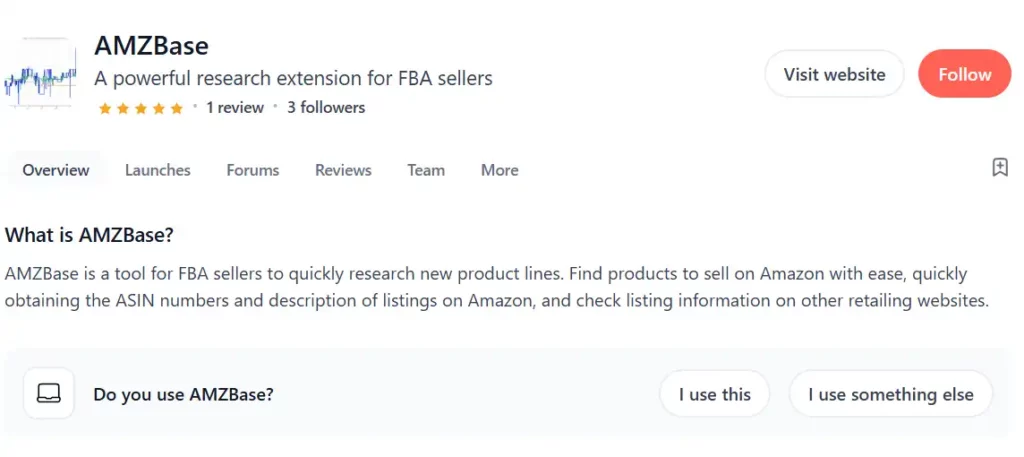
It gives you instant ASIN lookups, historical price references, and one-click jumps to CamelCamelCamel and Alibaba. Handy when you are checking a specific product, useless for finding one. No sales estimates.
3. CamelCamelCamel
The best free price-history tool, and the one sellers skip most often.

You can chart price movement over years, spot seasonality, and set drop alerts. Price history is underrated: a chart that only slopes downward tells you the category competes on price alone, which is a warning worth heeding before you order inventory.
4. FBA Wizard Pro free edition
Aimed at retail arbitrage and wholesale sourcing. The free edition offers basic sourcing research, sales-rank tracking, and limited database access. Fine for arbitrage hunting, thin for private label.
Tools with free trials
More power, borrowed briefly. Start a trial only when you have an evening free to actually use it.
1. Jungle Scout
Best known for sales estimates and niche discovery.
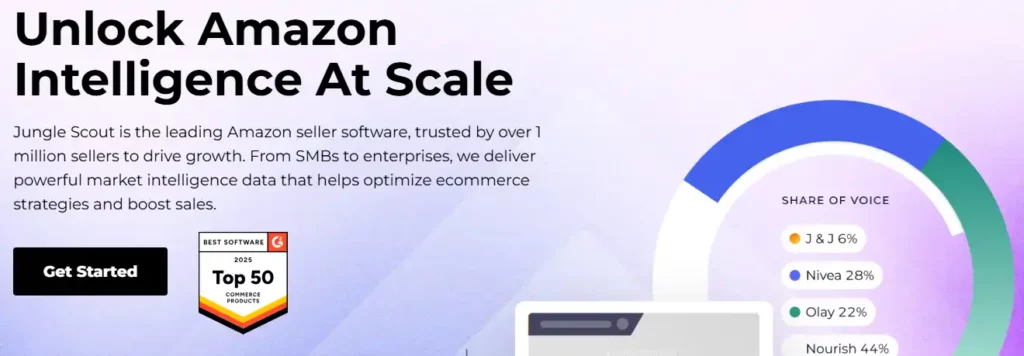
The trial opens the Product Database, Supplier Database, and Opportunity Finder. If you want one tool to judge demand quickly, this is the strongest starting point.
2. ZonGuru
Pairs research with listing work.
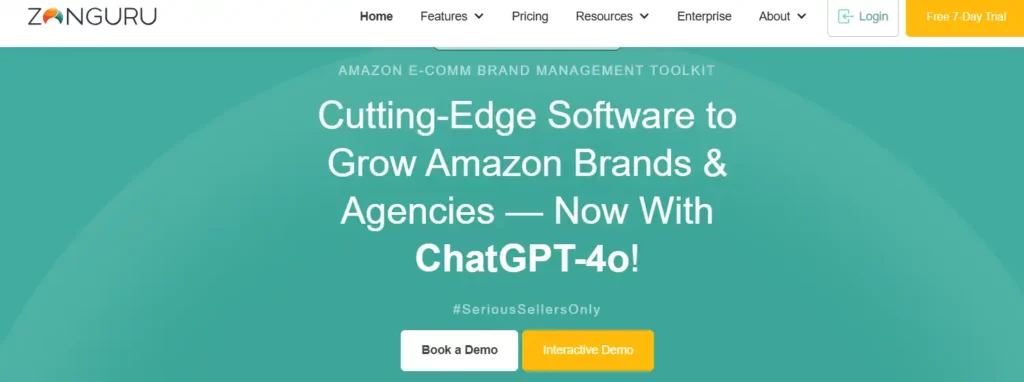
Niche Finder, Keyword Spotlight, and listing optimization tools in one place. Good pick if you expect to write listings straight after choosing a product.
3. SmartScout
Built for wholesale and arbitrage rather than private label.
Its brand and category views show you who dominates a niche, which is a different question from what sells. Useful for sourcing decisions.
4. AMZScout
A close alternative to Jungle Scout with a strong Chrome extension.
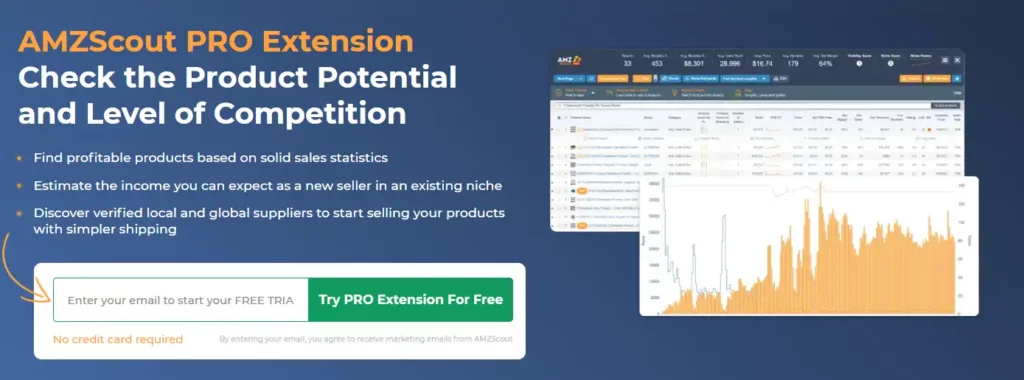
Product database, keyword tracker, and sales estimator. If Jungle Scout’s trial has expired, this covers similar ground.
So what is the best Amazon product research tool?
Asked plainly, it deserves a plain answer rather than a list.
If you are screening a handful of ideas: Helium 10’s free plan, plus CamelCamelCamel for price history. That combination costs nothing, covers keyword demand and price trend, and is genuinely enough to kill a bad idea. Most ideas are bad, and killing them cheaply is the whole job.
If you are screening dozens: a paid tier, and it does not much matter which. The honest position is that Jungle Scout, Helium 10 and AMZScout are more similar than their marketing suggests. They all estimate sales from best seller rank using their own models, they all disagree with each other on the same product, and none is reliably more accurate. Pick on interface and price.
If you are doing wholesale rather than private label: SmartScout, because brand-level and seller-level analysis is a genuinely different job, and I’ve found the others are built for product hunting and show it.
What I would not do is subscribe to two of them. In our experience running two research platforms produces contradictory numbers and a false sense of rigor, rather than a better decision.
Where paid Amazon product research software actually earns its cost
Three places, and outside them the free tier is fine.
Bulk filtering. Screening 400 products against criteria at once rather than one at a time. I’d call this the single strongest argument for paying, and it only matters above a certain volume of screening.
Historical depth. What a category did over two years, not this month. Seasonality is invisible in a snapshot, and a snapshot is what free tiers give you, which I’ve seen catch people out on genuinely seasonal products.
Keyword databases. Reverse-lookup on a competitor ASIN, which is how you find the terms a listing actually ranks for rather than the ones you assumed.
Everything else the paid tiers advertise is convenience. Useful convenience, and in my experience not the same thing as information you could not otherwise reach.
How accurate are the sales estimates?
Worth being direct, because I’d say this is what people are really buying.
Every one of these tools derives sales from best seller rank using a model of the rank-to-sales relationship in each category. That model is built from data the vendor has, and vendors have different data, which is why two tools shown the same product routinely disagree.
I’d treat any single figure as an order of magnitude. Where two tools agree closely, that is mild evidence. Where they disagree by a multiple, the category is one where estimation is hard, and I’d weight the number down accordingly.
I’ve found the estimates get least reliable in exactly the places beginners look hardest: low-volume categories, parent listings with many variations, seasonal products, and listings launched in the last month. Our guide to Helium 10’s Xray goes through which columns in these tools are scraped fact and which are inference.
How to validate a product with free tools only
Here is the sequence we run when the budget is zero:
- Start in Amazon’s search bar. Type your seed phrase and read the autocomplete. That is demand data, free, straight from the source.
- Count reviews on the first page. If the top ten average thousands, the niche is defended and you will pay in ads to enter it.
- Pull price history on two or three rivals. Downward-only charts mean margin pressure.
- Estimate sales from BSR, then halve your optimism. Estimates are ranges.
- Do the margin math last. Landed cost, Amazon fees, prep, freight, ads. If it only works at perfect volume, it does not work.
Nine ideas in ten die at step two. That is the point: killing weak ideas cheaply is the entire job of research.
Which should you start with?
For a first product, Helium 10’s free plan plus CamelCamelCamel covers you without a credit card. Once you are screening dozens of ideas rather than three, a trial of Jungle Scout or AMZScout earns its keep, because bulk filtering is where free tiers genuinely stop.
Personally, at idea stage I’d rather spend money on better product photography than on data. The research question is usually answerable free.
FAQ
What is the best Amazon product research tool?
For screening a few ideas, Helium 10’s free plan with CamelCamelCamel for price history is enough and costs nothing. For screening dozens, a paid tier pays for itself through bulk filtering, and Jungle Scout, Helium 10 and AMZScout are more alike than their marketing suggests. For wholesale rather than private label, SmartScout does a different job.
Is there free Amazon product research software?
Helium 10’s free plan, AMZBase and CamelCamelCamel cost nothing indefinitely. AMZScout, Jungle Scout, ZonGuru and SmartScout offer trials rather than free tiers. No free option gives reliable sales estimates, because estimation is the part the paid tiers are selling.
Which Amazon seller tools do I need for research?
Three capabilities rather than three products: keyword demand, price history, and a sales estimate you treat skeptically. Helium 10 free covers the first, CamelCamelCamel the second, and any of the trial platforms the third. Running two full platforms at once produces contradictory numbers rather than better decisions.
Can I do Amazon product research entirely for free?
Yes, for validating a handful of ideas. Free tools cover demand signals, price history, and rough sales estimates. What you give up is long-term historical data and bulk filtering, which start to matter once you screen hundreds of products.
Which free tool gives the most accurate sales estimates?
Every estimate is modelled from Best Sellers Rank, so they cluster together. Cross-checking two tools on the same ASIN beats trusting one, and treating all figures as ranges beats both.
Is the Helium 10 free plan enough for a beginner?
For keyword checks and product lookups, mostly yes. Usage caps are the constraint rather than missing features, so batch your research instead of browsing.
Do free trials require a credit card?
Most do, including the bigger platforms, and they bill automatically unless you cancel. Set a reminder the day you sign up. Permanently free tools like AMZBase and CamelCamelCamel ask for nothing.
What data actually matters when researching a product?
Demand, competition, and margin after every Amazon fee and your landed cost. A product that wins on demand and competition but loses on margin is not a product, it is a hobby.
Last updated: August 24, 2026. Tool plans and trial terms change often, so confirm current limits on each provider’s site.