
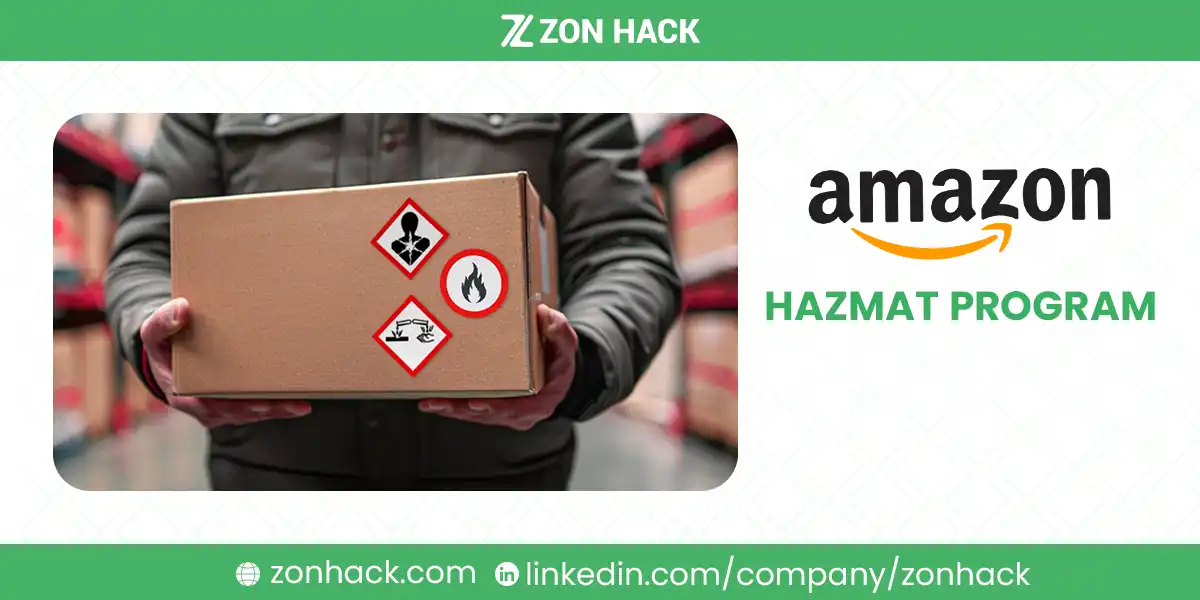
The Amazon hazmat program, formally the FBA Dangerous Goods program, lets sellers store and ship products classified as hazardous through FBA. Applying to the hazmat program is per product rather than per account. The application is not really an application. It is a document review, and what decides it is whether you can supply a valid Safety Data Sheet or an exemption sheet for each ASIN.
That framing matters, because sellers approach this expecting an approval decision about their business and it is nothing of the sort. Amazon is classifying your products, one by one, from the paperwork you provide. Better paperwork produces faster answers.
This is general information for sellers, not regulatory advice. Dangerous goods classification is technical and governed by transport regulation as well as by Amazon policy. Your manufacturer, a qualified dangerous goods specialist, or a testing laboratory should confirm your product’s classification. We handle the Seller Central side for client accounts as an Amazon SPN Verified Partner.
What counts as hazmat
Broader than most sellers expect, and this is where the surprises come from.
- Anything with a lithium battery, including devices with batteries built in. Headphones, toys, power banks, tools.
- Flammable liquids and solids. Nail polish remover, some cleaning agents, hand sanitizer, certain cosmetics.
- Aerosols and pressurized containers. Spray paints, deodorants, dry shampoo.
- Corrosives. Drain cleaners, some descalers, certain battery products.
- Oxidizers and peroxides, common in hair and cleaning products.
- Magnets, above certain strengths, because of aviation interference rather than toxicity.
- Environmentally hazardous substances, including some detergents and pool chemicals.
The first category catches almost everybody. A children’s toy with a small built-in battery is a dangerous goods shipment as far as transport regulation is concerned, however harmless it looks sitting on a shelf, and in my experience that single fact accounts for more unexpected hazmat reviews than every other category combined.
Check before you source, not after
Amazon provides a lookup tool, and using it before you buy inventory is the single most useful thing on this page.
In Seller Central, search for dangerous goods and open the tool that checks whether a product is classified as hazmat. Enter the ASIN. Amazon returns its classification status or tells you that a review is required.
For products you have not listed yet, ask your supplier directly whether the item ships as dangerous goods and request the documentation. A supplier who cannot answer that question about their own product is telling you something useful.
I’d do this at the sampling stage. In our experience the expensive version of this lesson is a container arriving for a product FBA will not accept.
The documents that decide your hazmat program application
Two documents do almost all the work.
Safety Data Sheet. The standard document describing a substance’s hazards, composition, handling, and transport classification, produced by the manufacturer. Amazon wants a current one, in English, identifying the product clearly. Most rejections we see are SDS problems rather than product problems: wrong product name, missing sections, an outdated revision, or a document covering a similar item rather than the exact one.
Exemption sheet. Where a product is not actually regulated, Amazon accepts an exemption sheet declaring that and explaining why. This is the route for the many products that look hazardous and are not, and in our experience it resolves more cases than the SDS route does.
Battery documentation. Lithium batteries carry their own requirements, and a UN 38.3 test summary is the document typically expected for cells and batteries. Ask your supplier for it by name. Manufacturers producing for regulated markets will have it, and one who has never heard of it is a warning about the product as well as the paperwork.
Amazon publishes templates for the SDS and exemption sheet. Use them. A document in Amazon’s own format gets reviewed faster than one a reviewer has to interpret, and I’ve found that single choice cuts days off the turnaround more reliably than anything else you can control.
Applying, in practice
- Confirm classification using the dangerous goods lookup for existing ASINs.
- Gather documentation per ASIN: SDS, exemption sheet, or battery test summary as applicable.
- Find the dangerous goods area in Seller Central and submit through it rather than through a general support case.
- Upload per ASIN. Classification is product by product, not account-wide, which is the point sellers most often misunderstand.
- Wait. Review commonly takes several business days and can take longer for genuinely complex products. Resubmitting mid-review slows it down.
- Read a rejection properly. Amazon states what was wrong. Fix that specific thing rather than resubmitting the same file, which I have watched sellers do four times.
When Amazon flags something that is not hazardous
This is the most common real-world problem and almost no guide covers it.
Amazon’s classification is conservative and automated in the first instance, so ordinary products get flagged. A cosmetic with no flammable content. A toy with no battery. A textile.
The route back is an exemption sheet, completed properly, stating the product is not regulated and why. Supply the manufacturer’s confirmation alongside it where you can.
Two practical notes. Inventory already at a fulfillment center can be blocked from sale while a classification review runs, which is why this is urgent rather than administrative. And a product wrongly classified once tends to stay classified until you correct it, so it is worth resolving rather than working around.
The costs nobody mentions
Approval is not the end of the arithmetic.
Storage capacity is limited. Amazon holds finite hazmat capacity, and dangerous goods inventory limits are separate from and tighter than your general limits. Plan restocking around that rather than discovering it in Q4.
Storage costs more. Hazmat storage carries higher fees. The gap widens in peak months, and I’d model Q4 separately rather than annualizing.
Some products cannot ship by air. Ground-only restrictions extend delivery times, which affects your delivery promise and can affect conversion. Worth modeling before committing to a product.
Some hazmat is excluded entirely. Explosives, certain corrosives, and several chemical classes are not eligible for FBA regardless of documentation. Approval to the program does not mean approval for every product in it.
Removals are harder. Getting dangerous goods inventory back out of Amazon is more restricted than ordinary stock, and in some cases disposal is the only option.
Model all of that before deciding a hazmat category is attractive. Our guide to FBA storage fees covers the general cost structure and hazmat sits above it.
What a good submission looks like
Worth describing, because the difference between a fast approval and two weeks of back and forth is mostly presentation.
One document set per ASIN, named clearly. Reviewers handle volume. A file called SDS-B08XYZ-ProductName.pdf gets processed. A file called scan3.pdf does not.
The exact product identified. Not the product family, not a similar item from the same factory. The model number and description on the document should match your listing.
Current revision, in English. Safety Data Sheets carry revision dates. An old one, or one in another language with no translation, comes straight back.
All sections present. A partial SDS missing the transport classification section is missing the only section Amazon genuinely needs.
Nothing extra. Marketing material, certificates for unrelated standards, and factory correspondence do not help and slow the read.
I’d spend an hour assembling this properly rather than a week resubmitting. The arithmetic is not close.
Packaging and labeling
Requirements come from transport regulation, principally IATA for air and DOT rules for road in the US, rather than from Amazon.
Packaging must contain the product securely with no leaks or damage in transit. Hazard labels and markings must be correct for the classification and clearly visible. Quantity limits per package apply for many classifications.
Get this right before shipping. A non-compliant dangerous goods shipment can be refused at the fulfillment center, and Amazon may dispose of it rather than return it. In our experience the appeal route on a client shipment once, and the goods were already gone.
If FBA does not work out
Merchant fulfillment is the alternative, and it comes with its own obligations: dangerous goods training for whoever packs, correct declarations, and a carrier who accepts the classification. Our guide to shipment performance covers the metrics that then become yours rather than Amazon’s.
For products with genuinely awkward classifications, a specialist third party logistics provider handling dangerous goods is frequently the more realistic route.
If you want the documentation and Seller Central process handled alongside the rest of the account, that sits within our account management and sourcing services. The classification itself belongs with your manufacturer or a dangerous goods specialist, and I would rather say that than pretend otherwise.
FAQ
What is the Amazon hazmat program?
Amazon’s FBA Dangerous Goods program, which allows sellers to store and ship products classified as hazardous through Fulfillment by Amazon. Classification happens per ASIN based on documentation you submit rather than as a single account-level approval.
How do I check if my product needs hazmat approval?
Use the dangerous goods lookup in Seller Central, searching for dangerous goods and entering the ASIN. For products you have not listed yet, ask your supplier whether the item ships as dangerous goods and request the documentation before you order inventory.
What documents does Amazon need for hazmat approval?
A current Safety Data Sheet in English identifying the exact product, or an exemption sheet where the product is not regulated. Lithium batteries typically also require a UN 38.3 test summary. Amazon publishes templates, and using them speeds up review.
How long does Amazon hazmat review take?
Commonly several business days, and longer for complex products or where documentation needs clarifying. Resubmitting while a review is open slows it down rather than speeding it up.
What if Amazon wrongly classifies my product as hazmat?
Submit a completed exemption sheet stating the product is not regulated and explaining why, ideally with the manufacturer’s confirmation. Do this promptly, since inventory already at a fulfillment center can be blocked from sale while the review runs.
Can all hazardous products be sold through FBA?
No. Explosives, certain corrosives, and several chemical classes are excluded regardless of documentation. Being approved for the program does not mean every product within it is eligible, so check the restricted list before sourcing.
Last updated: August 29, 2026. This is general information for sellers, not regulatory advice. Amazon’s dangerous goods requirements, storage limits, fee structures, and restricted product lists change, as does transport regulation. Seller Central carries Amazon’s current requirements and a dangerous goods specialist should confirm classification.