
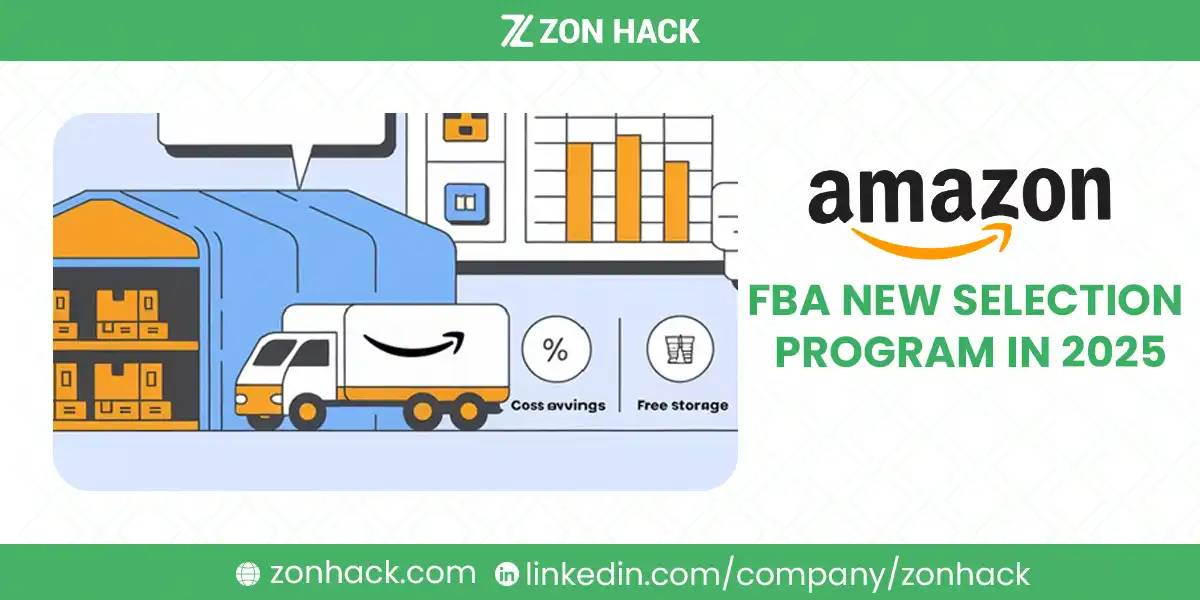
The FBA New Selection program is Amazon’s incentive for launching new branded products through FBA. Since July 30, 2026 it caps the referral fee at 10% on a new parent ASIN’s first 100 units and 5% on the next 100, waives monthly storage, liquidation and returns processing fees on the first 200 units, and adds a $75 Vine credit and a $50 coupon credit. The benefits run for 120 days from the ASIN’s first inbound receipt.
That is a much richer program than the one it replaced, and it changes how I’d sequence a launch. It still is not a reason to launch a product. It is a reason to launch a good product faster and with a cleaner first shipment.
What changed on July 30, 2026
Amazon replaced the old program on that date. The previous version paid a rebate averaging about 10% (0% to 12% by category) on the first 100 standard-size or 50 non-standard units over 120 days, plus a 25% Vine discount. Amazon’s 2026 program page sets out the new terms, and its page on the previous program confirms that ASINs enrolled under the old rules keep those benefits until they expire.
| Benefit | Old program (to July 30, 2026) | 2026 program |
|---|---|---|
| Sales incentive | Rebate, about 10% average | Referral fee capped at 10% (first 100 units), 5% (next 100) |
| How it is paid | Rebate after the sale | Applied on the order itself |
| Monthly storage | Waived on early units | Waived on the first 200 units |
| Storage utilization surcharge, low-inventory-level fee | Not listed | Waived on the first 200 units |
| Liquidations | Free | Free on the first 200 units |
| Returns processing | Selected categories | Free on the first 200 units, any category |
| Vine | 25% discount | $75 Vine credit (3 to 10 units) |
| Coupons | Not included | $50 coupon credit |
| Window | 120 days | 120 days from first inbound (165 with Vine pre-launch) |
| ASINs covered | Branded and unbranded | Branded only |
Two details people miss. The referral cap is calculated on total order value, so shipping or gift wrap charges slightly reduce the discount. And both credits, Vine and coupon, must be used within 60 days of the ASIN having a buyable offer.
Who and what qualifies
Amazon’s rules are specific, and the most common misunderstanding concerns what “new” means.
For the seller:
- A Professional selling plan.
- FBA enabled on the account.
- A trailing six-month Inventory Performance Index (IPI) of at least 300, if you have a score. A new FBA seller without one is not blocked by this.
For the product:
- A branded parent ASIN. Non-branded ASINs are explicitly excluded, which is the biggest single change from the old program and pushes it firmly toward private label sellers.
- No FBA shipment of that parent ASIN in the past 12 months, by any seller. This is about the ASIN, not your account. A product you sold once years ago can qualify again; a “new to you” wholesale ASIN that another seller ships to FBA every month never will.
- New condition. Used items are excluded.
- Not in an excluded category: Books, DVDs, Music, Software, Video Games, Videos, consoles and their accessories, plus Haul ASINs.
My read of the eligibility rules: this is now a private label launch program in all but name. If you resell other brands, I’d plan as though it does not exist.
How to enroll
Enrollment depends on where your account stood when the new version launched.
- New FBA sellers are enrolled automatically when their first branded shipment is received within 90 days of listing.
- Existing sellers who were not enrolled must opt in. Opt-in opened on June 17, 2026, from the program’s dashboard in Seller Central.
- Sellers already enrolled in the old program received the 2026 benefits automatically, but must confirm enrollment. Amazon’s 2026 program page gives March 31, 2027 as the deadline. The older program page and a July forum announcement mention October 31, 2026, so I’d confirm early rather than rely on the later date.
The dashboard shows each ASIN’s status: Inactive, Eligible, Provisional or Active. When you see Provisional, the ASIN looks eligible but the benefit window has not started; it starts on first receipt at a fulfillment center.
How it stacks with New Seller Incentives. If you are also in Amazon’s New Seller Incentives, the New Seller Incentives version of any overlapping benefit is applied first. The New Selection waivers for liquidation, returns and storage still apply on top.
The three questions this page gets searched for
“Does FBA New Selection include free removals?” No. Neither the old nor the 2026 program lists free removal orders. What is free is liquidation of the first 200 units, which is a different thing: Amazon sells the stock through its liquidation channel and pays you a small recovery, rather than returning the goods to you. If you want the units back, the standard removal fee applies.
“Is there an inbound placement fee waiver for new ASINs?” Not now. Amazon ran a temporary waiver on the first 100 units of new parent ASINs for shipments created between December 1, 2024 and March 31, 2025, announced in its 2025 fee update. The 2026 program terms do not include it. Plan inbound placement costs as normal.
“Can I still enroll in Small and Light?” No. New Small and Light enrollment ended on July 17, 2023, and Amazon replaced the program with low-price FBA rates on August 29, 2023. In 2026, items priced under $10 automatically pay fulfillment fees $0.86 below the standard rates, per Amazon’s low-price FBA page. There is nothing to enroll in; the price triggers it.
Where the value actually sits
The headline is the referral cap, and I think it is the least important part for a typical launch. Here is why.
A worked comparison. Take a $25 product in a category with a 15% referral fee.
| Units | Standard referral fee | With 2026 New Selection | Saving |
|---|---|---|---|
| First 100 | $375 | $250 (10%) | $125 |
| Next 100 | $375 | $125 (5%) | $250 |
| Total, 200 units | $750 | $375 | $375 |
That is real money, and it only arrives if the 200 units sell inside 120 days. A launch that sells 60 units in four months earns a $75 saving. Don’t plan a launch around a discount on sales you have not made.
The waivers matter more when you are wrong. Free storage, free liquidation and free returns processing on the first 200 units lower the cost of a product that fails. In my view that is the program’s real value: it makes testing a new product cheaper, because the exit is partly paid for.
The credits are the easiest money. A $75 Vine credit and a $50 coupon credit cover early reviews and a launch coupon most brands would pay for anyway. I’d use both in the first weeks, since the 60-day clock starts once the offer is buyable.
What this means for launch planning
The 120-day clock starts at first receipt, not at first sale. That one fact shapes most of my advice.
Ship a complete first batch, not a trickle. Units received after day 120 earn nothing, so a launch that sends 50 units, waits, then sends 300 more has burned the window on its smallest batch.
Fix the listing before the stock lands. Every day the product sits in a fulfillment center with weak images or an unapproved A+ module is a day of the window gone. Our product launch checklist runs the order I’d follow.
Use Vine pre-launch if you qualify. It stretches the window to 165 days, which gives reviews time to arrive before the referral cap runs out.
Keep the first shipment simple. Prep and labeling mistakes delay receipt, and receipt starts the clock. Since Amazon’s US prep and labeling service ended on January 1, 2026, the labels must be right before the boxes leave your supplier. Our guide to sending your first shipment to Amazon FBA covers the sequence that avoids the common delays.
Model the fees honestly. The program changes the first 200 units, not the product’s economics. Run the numbers at standard fees too, with our FBA fee calculator guide, because unit 201 pays full price.
What I would actually do
Treat the program as launch insurance, not launch funding. The waivers protect a failed test; the referral cap rewards a successful one.
Check eligibility before ordering inventory. A quick look at whether the parent ASIN has had FBA stock in the past 12 months avoids planning around a benefit you will not get.
Confirm enrollment now if you were in the old program. Two different deadlines appear on Amazon’s own pages, and the earlier one is October 31, 2026.
If you would rather have a launch planned and run around these windows, that is part of our account management service. We are an Amazon Ads partner and an Amazon SPN Verified Partner.
FAQ
What is the Amazon FBA New Selection program?
It is Amazon’s incentive for launching new branded products through FBA. Since July 30, 2026 it caps the referral fee at 10% on a new parent ASIN’s first 100 units and 5% on the next 100, waives storage, liquidation and returns processing fees on the first 200 units, and adds a $75 Vine credit and a $50 coupon credit, all within 120 days of first inbound receipt.
Do I need to apply for FBA New Selection?
New FBA sellers are enrolled automatically when their first branded shipment is received within 90 days of listing. Existing sellers who were not enrolled must opt in from the program dashboard, and sellers enrolled under the old program must confirm their enrollment.
Which ASINs qualify for FBA New Selection?
Branded, new-condition parent ASINs that no seller has shipped to FBA in the past 12 months, outside excluded categories such as books, media, video games and consoles. The seller needs a Professional plan, FBA enabled, and an IPI of at least 300 where a score exists.
Does FBA New Selection include free removals?
No. The program waives liquidation fees on the first 200 units, which means Amazon sells the stock through its liquidation channel. Removal orders that send the goods back to you are charged at standard rates.
Is Amazon Small and Light still available?
No. New enrollment ended on July 17, 2023, and low-price FBA rates replaced the program on August 29, 2023. In 2026 items priced under $10 automatically pay fulfillment fees $0.86 below standard, with no enrollment.
When does the FBA New Selection benefit window start?
At first receipt of the ASIN at a fulfillment center, not at first sale. The window lasts 120 days, or 165 days with Vine pre-launch, so delays in transit or prep use up the benefit.
Last updated: October 25, 2026. Rewritten for the 2026 FBA New Selection program that replaced the previous version on July 30, 2026. Amazon revises fees and program terms regularly, and two enrollment-confirmation deadlines currently appear on its pages, so confirm the terms for your account in Seller Central.