The Problem
At the time of takeover, the SKU was facing multiple performance constraints:
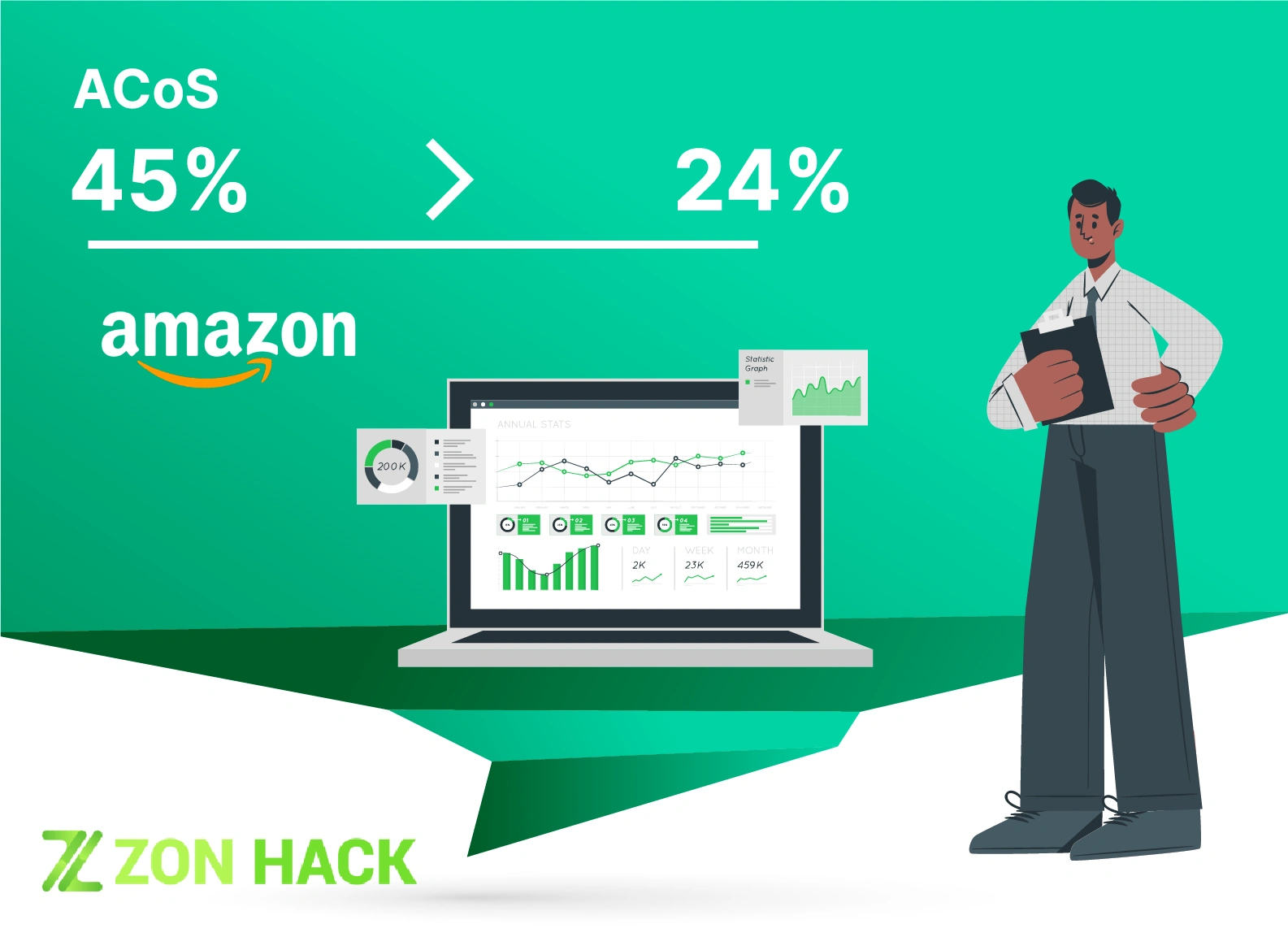
- ACoS fluctuating between 39–45%
- Monthly revenue averaging $18,750
- Conversion rate stuck at 8.7%
- Duplicate search terms competing across campaigns
- High ad spend leakage on non-converting keywords
- Inconsistent price testing without performance tracking
- 78 days of inventory, approaching aged storage risk
Ad spend was high. Organic ranking was slowly declining. Margins were tightening.
The SKU wasn’t failing.
It just couldn’t scale.
The Stakes
If left uncorrected, the situation would likely have escalated into:
- Margin compression below sustainability thresholds
- Organic rank erosion due to inefficient spend
- Increased storage surcharge exposure
- Reduced capital reinvestment ability
- Over-dependence on paid traffic
In short, the SKU risked becoming a high-revenue, low-profit liability.
And one inefficient SKU can distort the performance of an entire brand portfolio.
This wasn’t about minor optimization.
It was about strategic intervention.
Our Approach
ZonHack deployed a structured, SKU-focused transformation strategy.
Step 1: PPC Architecture Rebuild
We identified that the primary issue wasn’t traffic volume — it was structural inefficiency.
Actions taken:
- Eliminated duplicate search terms across campaigns
- Segmented targeting into Brand / Non-Brand / Competitor structure
- Implemented negative keyword sculpting
- Removed high-spend, zero-conversion search terms
- Introduced 7-day harvesting cycles
- Optimized Top-of-Search bid multipliers strategically
Within 30 days, wasted ad spend dropped by 28%.
Step 2: Conversion Rate Optimization
Driving better traffic means nothing without better conversion.
We:
- Reworked title keyword hierarchy
- Clarified primary benefit positioning
- Refined feature images for value clarity
- Strengthened A+ content comparison logic
- Improved mobile readability
Conversion rate increased from 8.7% → 13.2% within 60 days.
That single improvement multiplied advertising efficiency instantly.
Step 3: Strategic Price Stabilization
The SKU had been undergoing inconsistent price testing.
We implemented:
- Controlled biweekly price testing
- Elasticity tracking vs unit velocity
- ASP performance monitoring
- Margin floor enforcement
Instead of reacting to competitors, pricing became data-driven.
Step 4: Inventory Discipline
78 days of stock created risk and tied up capital.
We:
- Reforecasted demand using cleaned PPC data
- Reduced inbound overstock
- Improved sell-through velocity
- Stabilized inventory at ~52 days
Inventory moved from liability to controlled asset.
The Resolution
Within 90 days, the SKU transformed structurally:
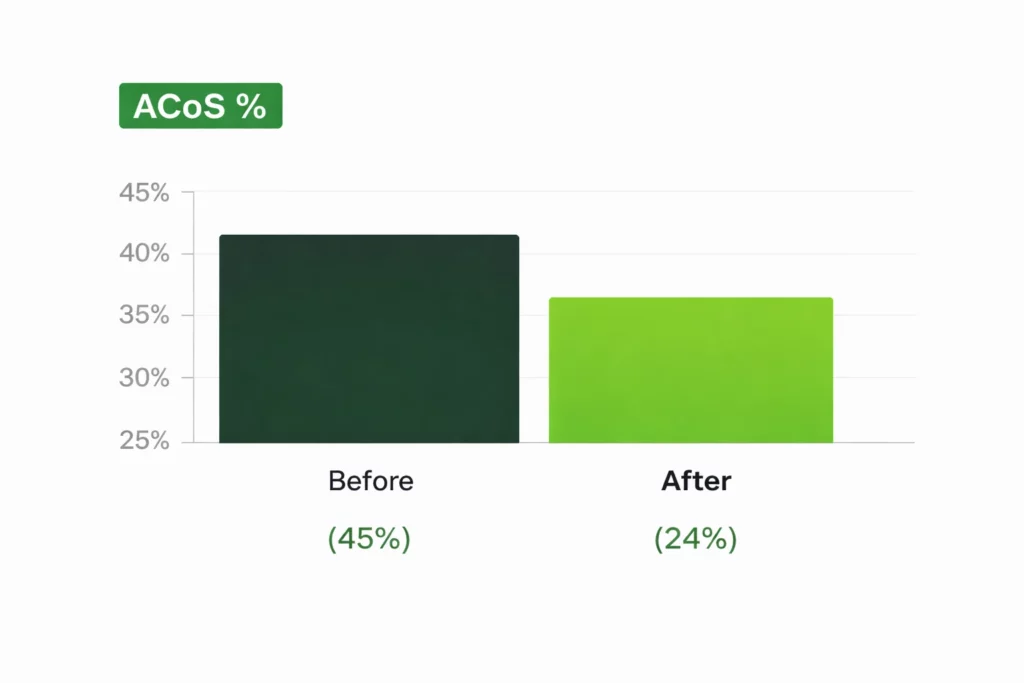
- ACoS reduced from 45% peak to 24.3%
- TACoS dropped from 21% to 12.8%
- Monthly revenue increased from $18,750 to $31,400
- Net profit margin improved from 12% to 26%
- Organic ranking recovered for 7 primary keywords
The breakthrough wasn’t aggressive scaling.
It was intelligent restructuring.
Efficiency first. Scale second.
Results & Impact
After stabilization, the SKU became:
✔ Predictable
✔ Profitable
✔ Structurally sound
✔ Scalable
Ad spend increased moderately — but revenue growth outpaced it significantly.
Instead of chasing sales, the SKU began compounding growth through stronger organic positioning.
The transformation wasn’t accidental.
It was engineered.
Key Takeaways
- High ACoS often signals structural PPC flaws, not demand issues
- Duplicate keyword targeting silently destroys efficiency
- Conversion optimization multiplies ad performance
- Controlled price testing protects margin
- Inventory discipline supports marketing performance